A basic look, touch and tilt assessment can highlight visible concerns, while authoritative verification requires more than a visual inspection.
Washington, DC, October 16, 2026 — Travelers can learn a surprising amount about the condition of their passports through a careful visual and tactile review, but even a well-informed personal inspection cannot replace authoritative verification, professional document examination or government confirmation when authenticity becomes a serious concern.
A simple look, touch and tilt assessment can help travelers notice damaged pages, unusual surface changes, misaligned security features or other visible irregularities, while also giving them a better understanding of how modern passports combine physical materials, optical effects and electronic components.
Start With the Overall Condition of the Booklet
The first step in a basic passport inspection involves looking at the document as a complete booklet rather than concentrating only on the photograph, because damage or manipulation can sometimes affect binding, page alignment, covers or areas far from the principal identity page.
Travelers can check whether the cover appears securely attached, whether pages remain properly aligned and whether the booklet opens naturally without obvious separation, unusual cuts, missing sheets or significant structural differences between neighboring sections.
Ordinary wear can soften covers, slightly curl corners, and leave minor surface marks after years of travel, so interpret visible damage in context rather than automatically treating it as evidence of alteration.
A passport that has experienced water damage, excessive heat or substantial bending may legitimately look different from a new document, although severe damage can still justify replacement because it may interfere with inspection equipment or border processing.
Look Closely at the Identity Page
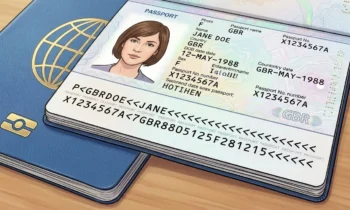
The identity page contains the passport holder’s portrait, name, date of birth, passport number and other important information, making it a logical place for travelers to begin a more detailed visual examination.
Depending on the passport design, the data page may use polycarbonate, security laminates, laser engraving, specialized printing or combinations of those technologies, and the appearance should generally remain consistent across the personalized fields.
Travelers can look for obvious signs of peeling, bubbling, cracking, scraping, discoloration or unusual surface disturbance around the photograph and biographical information, particularly when one area appears noticeably different from the surrounding material.
Minor manufacturing variation or ordinary wear can occur in genuine documents, so treat an unusual-looking feature as a reason for closer review rather than definitive proof that something is wrong.
Compare the Portrait With the Printed Information
A traveler can confirm that the portrait, name, date of birth and other visible information remain accurate and correspond with the identity that the passport was originally issued to represent.
If the document contains several visible portraits, including smaller secondary images or additional laser-generated representations, those images should generally correspond with the main portrait even though their size, contrast or presentation may differ.
Modern passport designs often create this redundancy deliberately because multiple representations give authorities additional opportunities to identify inconsistencies in the holder’s identity or unauthorized modification of the principal photograph.
The International Civil Aviation Organization’s travel document program provides the broader international framework supporting standardized machine-readable passports, electronic travel documents and interoperable security practices used by governments around the world.
Touch Can Reveal Material Differences
A basic tactile examination can help travelers become familiar with how their passport normally feels, particularly around the identity page, binding and areas where specialized materials or engraving techniques create distinctive surfaces.
Polycarbonate identity pages typically feel substantially different from conventional paper pages, while some laser-personalized documents may contain raised, recessed or textured elements that contribute to the overall physical construction.
Travelers should avoid scratching, bending or deliberately stressing those features, because the purpose of a personal inspection is simply to notice unusual changes rather than perform destructive testing that could damage a legitimate document.
Unexpected adhesive residue, rough patches, separation between layers or unusual thickness may deserve attention, especially when those characteristics appear around personalized information rather than in areas affected by ordinary handling.
Tilt the Passport to Observe Optical Features
Tilting the identity page under ordinary white light can reveal holograms, color-shifting elements, changing portraits, or other optically variable features that respond differently depending on viewing angle.
These features are designed to show controlled movement or visual transitions, so a flat reproduction may not show the same behavior, even if it looks convincing from one fixed angle.
Travelers don’t need specialized training to notice whether a feature visibly changes as the passport moves, but determining whether that movement matches official specifications requires reliable reference information and professional knowledge.
The Amicus International Consulting guide to passport security and modern counterfeit detection provides a broader explanation of how physical security features, electronic authentication and identity checks work together during modern passport examination.
Look at More Than the Photograph Page
Visa pages can contain watermarks, fine-line printing, ultraviolet features, security fibers, page numbers and other elements that contribute to the integrity of the entire passport booklet.
Travelers can check whether pages appear consistently manufactured, remain in the proper order and show no obvious evidence of cutting, substitution or unexplained differences in size and alignment.
One page that looks substantially newer, thicker or differently positioned than its neighbors may deserve additional attention, although legitimate manufacturing variations and normal wear can sometimes create harmless differences.
Because many passport pages are connected through folded-sheet construction, removing or replacing one section can disturb another part of the booklet and create inconsistencies that become visible on closer inspection.
Check the Binding Without Disturbing It
The center stitching and binding structure can offer clues about whether the booklet remains physically intact, but travelers should avoid pulling threads or aggressively manipulating pages during inspection.
Visible cuts, loose sections, missing stitching or unusual separation near the center fold can justify closer attention, particularly when the damage appears localized around one page or one portion of the document.
Normal use can soften the spine and create minor wear around folded sections, so evaluate the entire booklet rather than judging one isolated mark without context.
Professional document examiners can compare stitching patterns, thread characteristics and page construction against genuine reference examples, which goes well beyond what a traveler can reliably determine through casual observation.
Fine Printing Can Reward a Closer Look
Some passport pages contain microprinting, intricate background patterns and extremely fine lines that appear decorative from normal viewing distance but reveal greater complexity under suitable magnification.
Travelers may notice whether these elements appear sharp and consistent, although accurately determining whether microprinting matches official manufacturing standards usually requires better reference material and examination equipment.
A blurred or damaged area can result from wear, moisture or abrasion rather than counterfeiting, making it important to avoid treating every printing irregularity as evidence of fraudulent production.
These features matter because they contribute to a broader network of security characteristics rather than serving as a single pass-or-fail authenticity test.
Compare Information Across Different Areas
A useful personal check involves confirming that the passport number, holder’s name, date of birth and expiration information remain consistent wherever those details appear visibly on the document.
The machine-readable zone near the bottom of the data page also contains standardized information, but travelers should not assume that correctly formatted machine-readable text alone proves government issuance.
Professional systems can compare printed fields, machine-readable information and electronic chip data, making discrepancies between different representations considerably more significant during official inspection.
Travelers who notice obvious disagreement between major fields should contact the appropriate passport authority rather than attempting to diagnose or modify the document themselves.
Electronic Chips Add Information That Eyes Cannot See
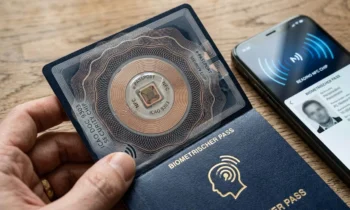
Biometric passports contain contactless electronic chips that store standardized passport data and a digital facial image, adding an authentication layer you cannot evaluate by looking at the booklet alone.
Compatible applications and inspection systems can sometimes read information from these chips, but successful electronic reading should not be mistaken for full confirmation that every physical component of the passport is genuine.
Likewise, an unsuccessful smartphone scan does not automatically indicate a counterfeit passport because device positioning, antenna location, protective covers, software configuration, and physical chip damage can all affect reading performance.
Electronic authentication becomes most useful when digitally stored information, cryptographic verification and visible passport details all support one another during a broader assessment.
Ultraviolet Features Require the Correct Reference
Some travelers use ultraviolet lights to examine hidden artwork, fibers, or fluorescent designs, but these features vary substantially by country, passport generation, and document type.
Seeing fluorescence does not independently prove authenticity, while failing to see an expected feature may simply mean that the wrong wavelength, lighting conditions or reference information has been used.
Reliable comparison therefore requires knowing precisely which passport series is being examined and what ultraviolet characteristics should legitimately appear in that document generation.
The European Union’s Public Register of Authentic Identity and Travel Documents Online provides publicly accessible information about security characteristics found in many genuine identity and travel documents, helping users understand how widely designs can vary.
A Visual Inspection Cannot Confirm Government Issuance
The most important limitation of a personal passport review is that physical appearance alone cannot establish whether the issuing government actually created and issued the document.
A sophisticated counterfeit may convincingly imitate many visible features, while a damaged genuine passport may show irregularities that make it look suspicious even if it was legitimately issued.
Government records, cryptographic validation, secure databases, and trained document examiners provide verification methods that ordinary visual inspection cannot replicate.
For this reason, travelers with serious concerns about authenticity, validity or document condition should contact the issuing passport authority or appropriate consular office instead of relying entirely upon personal inspection.
One Feature Should Never Determine the Conclusion
A hologram that moves correctly does not prove an entire passport is genuine, just as one damaged page or failed electronic scan does not automatically prove that a document is fraudulent.
Modern passport security relies on overlapping physical, optical, biometric, and cryptographic systems, creating several independent ways for authorities to spot contradictions or suspicious characteristics.
Travelers can therefore use visible features as general indicators of a document’s condition, but they should recognize that professional authentication involves evaluating how different security elements interact.
The strongest evidence emerges when the booklet structure, printed information, optical features, electronic data, and government records all consistently support the same document and identity.
Personal Inspection Is Most Useful for Detecting Damage
For most legitimate travelers, the greatest practical value of examining a passport is identifying physical damage before an international trip, not attempting amateur forensic authentication.
A cracked identity page, detached cover, severely damaged machine-readable zone, or badly deteriorated booklet may create problems during airline check-in or border inspection even when the passport was unquestionably issued legitimately.
Discovering these problems early gives the traveler a chance to contact the issuing authority and decide whether a replacement is advisable before reaching an airport or international border.
Regular inspection can therefore function as basic document maintenance, helping travelers identify deterioration that might otherwise become apparent only during an important journey.
Look, Touch and Tilt Provide a Useful Starting Point
Examining the printing and page condition, gently touching the booklet, and tilting it under normal light can show travelers how sophisticated modern passport construction has become.
These simple observations can identify obvious damage, unusual structural changes, or inconsistencies that deserve further attention, but they should never replace official verification.
Professional authentication relies on document specifications, specialized equipment, electronic systems, biometric comparisons, and government information not available through an ordinary household inspection.
A traveler can therefore learn a great deal by carefully examining a passport, provided the exercise remains what it is intended to be: a basic assessment of visible condition rather than a definitive declaration of authenticity.
Modern passports are designed so physical and digital evidence reinforce one another, making careful personal inspection useful for awareness while reserving authoritative conclusions for trained examiners and the government systems that issue and validate travel documents.