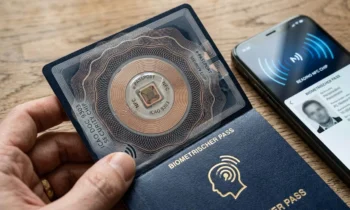
Printed document details can supply the access information readers need to initiate protected electronic communication.
WASHINGTON, DC, October 13, 2026 — The machine-readable zone printed inside a modern passport does more than provide convenient automated data capture, because selected information from those standardized lines can also help authorized inspection equipment establish protected communication with the document’s contactless electronic chip.
This relationship connects the physical passport with its electronic component, requiring compatible readers to obtain specified document information before accessing protected chip contents under access-control mechanisms such as Basic Access Control or Password Authenticated Connection Establishment.
The MRZ Was Originally Built for Reliable Machine Reading
The machine-readable zone, commonly abbreviated MRZ, presents standardized passport information in a format designed for optical recognition, allowing border systems to capture essential identity and document details quickly without requiring an officer to enter every field manually.
ICAO standards define the structure and positioning of machine-readable information so that passports issued by different governments can be processed by compatible inspection equipment throughout international travel environments while maintaining predictable data formatting.
The ICAO machine-readable travel document framework also links information from the physical document to electronic chip-access procedures, showing how the familiar printed zone became part of a broader digital security architecture.
Printed Information Can Help Authorize Electronic Access
A contactless passport chip protected by access control does not simply release its ordinary protected contents whenever nearby radio-frequency equipment detects its presence, because the inspection system must first demonstrate knowledge derived from the physical travel document.
ICAO specifies that the inspection system can obtain the information required for chip access optically or visually from the passport, including through the machine-readable zone, before it establishes the protected electronic session.
This arrangement creates an important link between presenting the physical passport and accessing the electronic identity information stored in its chip.
The MRZ Supplies Several Relevant Document Values
For passport access procedures, selected information from the machine-readable zone can include the passport number, the holder’s date of birth, and the document’s expiration date, together with check digits incorporated into the standardized printed structure.
Compatible software can process those values according to the applicable electronic passport protocol and derive the password-related information required to begin the protected exchange with the contactless integrated circuit.
The reader therefore obtains its starting information from data physically represented on the passport rather than from an unrestricted electronic identifier broadcast automatically by the chip.
The MRZ Is Not a Conventional Secret Password
Machine-readable information remains visible on the passport identity page, so it should not be treated as a long confidential password comparable to a banking credential, private cryptographic key, or user-selected security phrase.
Its security role instead comes from requiring the reader to obtain information from the physical document before the chip grants ordinary access, making casual remote interaction harder than with completely unrestricted contactless storage.
The protection strengthens when protocols such as PACE use that limited starting information in a cryptographic exchange to establish much stronger session keys for subsequent communication.
Physical Presentation Becomes Part of Electronic Authorization
ICAO’s access-control model assumes that obtaining the necessary information from an unviewed passport should ordinarily be difficult, so successfully acquiring the printed data indicates the document was knowingly presented for inspection.
This does not make the printed MRZ secret, but it creates a practical consent-related boundary between merely carrying a closed passport and deliberately placing the document where authorized inspection equipment can capture the information required for chip access.
The system therefore uses the physical document itself as one component of the electronic access process, rather than allowing contactless communication to operate completely independently of the passport booklet.
Basic Access Control Used MRZ Information Early
Basic Access Control, commonly abbreviated BAC, became one of the earliest widely deployed mechanisms for limiting access to electronic passport information while establishing encrypted communication between the document and compatible readers.
BAC derives cryptographic material from machine-readable passport information, creating an access requirement that prevents arbitrary readers lacking the relevant document details from immediately obtaining ordinary protected chip data.
Although BAC represented an important security improvement over completely open electronic access, later cryptographic developments exposed limitations related to the relatively modest entropy of the underlying document information.
PACE Provides Stronger Protection From the Same Starting Point
Password Authenticated Connection Establishment, commonly known as PACE, can also use MRZ-derived information as the initial password while employing a more sophisticated cryptographic exchange to establish stronger session keys between the reader and passport.
ICAO specifies that an inspection system supporting PACE should derive the applicable password key from the MRZ unless the system knows another supported access value, such as a Card Access Number.
The protocol therefore preserves the practical link between physical passport presentation and electronic access while reducing dependence upon the limited cryptographic strength of the visible document information itself.
PACE Does Not Use the MRZ as the Final Encryption Key
Crucially, PACE does not simply encrypt the entire electronic passport session with the passport number, birth date, expiration date, or another easily understood combination of printed identity fields.
Instead, the MRZ-derived information initiates a password-authenticated cryptographic procedure through which the reader and chip establish stronger session keys specifically for the protected interaction during that inspection.
This design lets a short, structured piece of document information serve as an access credential without forcing the security of every subsequent message to depend directly on that limited value.
Secure Messaging Begins After Successful Access
When PACE completes successfully, ICAO specifies that the electronic passport begins secure messaging, grants access to permitted data, and requires subsequent communication to use the protected session established through the protocol.
Secure messaging provides confidentiality and integrity protections for commands and responses exchanged between the chip and inspection equipment, reducing opportunities for outside observers to understand or modify legitimate communication occurring over the contactless interface.
The MRZ therefore indirectly helps protect later electronic communication, even though its printed characters are not the long-term session keys used to secure those exchanges.
The Access Procedure Helps Reduce Skimming
Skimming involves an unauthorized reader attempting to obtain information from a contactless document without the holder deliberately presenting the passport for ordinary inspection, making initial access controls particularly important for privacy.
Requiring knowledge derived from the physical passport creates an obstacle because detecting the contactless chip by radio does not automatically provide the reader with everything needed to begin an authorized protected session.
ICAO describes chip access control as a mechanism intended to reduce both skimming and eavesdropping by requiring the inspection system to demonstrate knowledge of information associated with the physical document.
The MRZ Also Supports Ordinary Data Capture
The security role of the machine-readable zone operates alongside its original operational purpose, because border systems can still use the same printed characters to populate identity fields and reduce manual transcription during inspection.
Names, nationality, document number, birth information, expiration information, and related standardized values can therefore support both conventional passport processing and the electronic procedures required to access protected chip data.
This dual function shows how an established physical passport feature was integrated into later electronic security without requiring travelers to carry a separate password for contactless authentication.
Check Digits Help Protect Against Reading Errors
Machine-readable passport fields include standardized check digits that let inspection software identify common transcription or optical-recognition errors before using unreliable information during document processing.
This is especially useful for electronic access because a single incorrectly captured character can prevent the reader from extracting the information the chip provides, causing an otherwise legitimate passport communication attempt to fail.
A failed access attempt can therefore result from incorrect optical capture or manual entry rather than indicating that the passport itself is fraudulent or electronically defective.
Manual Entry Remains an Important Backup
ICAO specifies that inspection systems should allow relevant physical document information to be entered manually when machine reading is unavailable, preserving access to legitimate electronic passports when optical recognition fails.
This operational backup matters because passports can wear, glare, reader misalignment, or other conditions can make automatic capture less reliable, even when the printed information remains legible to a trained inspector.
Manual entry therefore maintains the link between physical document knowledge and electronic access without making successful optical character recognition an absolute prerequisite for legitimate passport inspection.
The MRZ Does Not Authenticate the Issuing Government
Successfully using machine-readable information to establish chip access shows the reader had the expected starting data, but it does not independently prove the electronic information originated from the government named on the passport.
Passive Authentication performs that different function by evaluating the digital signature protecting electronic passport data and determining whether the signing credentials connect with an issuing authority trusted by the inspection system.
The MRZ therefore opens the protected communication channel, while issuer authentication requires separate cryptographic evidence tied to the stored passport information.
Access and Data Integrity Are Different Security Layers
An inspection system can successfully derive the access information from the machine-readable zone and communicate with a chip whose protected electronic records nevertheless contain an integrity problem requiring additional investigation.
Conversely, authenticated data can exist within a legitimate passport whose electronic access fails temporarily because the machine-readable information was captured incorrectly or the contactless communication experienced a technical problem.
Separating these possibilities prevents a successful MRZ-based connection from being mistaken for complete electronic authentication and prevents one unsuccessful connection from becoming automatic proof of document fraud.
The MRZ Does Not Prove the Chip Is Original
Even when machine-readable information enables successful access and Passive Authentication confirms that the stored data remain genuinely signed, another question remains: do those authentic records reside on the original secure chip?
Active Authentication, Chip Authentication, or related mechanisms can provide additional evidence against chip cloning or substitution by testing secret cryptographic capabilities associated with the legitimate electronic component.
The machine-readable zone therefore supports access rather than replacing the anti-cloning protections available in more advanced electronic passport security architectures.
Facial Verification Occurs Later in the Process
Once a border system has established secure access and gained sufficient confidence in the protected electronic information, it can use the stored facial image as a biometric reference to compare the passport with the traveler.
That comparison checks whether the person presenting the document resembles the authenticated passport holder, which is a different question from whether the reader had the MRZ information needed to establish electronic communication.
An impostor using a genuine passport can therefore pass the access stage but face problems during later biometric holder verification.
Government Status Checks Remain Separate Again
The machine-readable zone can help identify the passport and support chip access, but it cannot independently reveal whether the issuing authority subsequently reported the document lost, stolen, canceled, revoked, or otherwise invalid.
Border authorities therefore use document-status databases and related government systems alongside electronic authentication when determining whether an otherwise genuine passport remains acceptable for current international travel.
This distinction reinforces the broader principle that access, authenticity, identity, legal status, and immigration eligibility are separate questions, even when modern border systems process them rapidly in one automated sequence.
MRZ Information Helps Connect Physical and Electronic Identity
The passport number, birth details, expiration information, and related machine-readable values appear on the identity page and can also appear in the electronic chip.
This duplication lets inspection systems compare the physical and electronic representations and identify inconsistencies that might indicate alteration, incorrect personalization, damaged data, or another condition requiring closer examination.
The same information can therefore first help gain chip access and later verify that the document’s physical and electronic identities remain internally consistent.
PACE Can Use an Alternative to the MRZ
PACE can also support a Card Access Number when the relevant document includes one and the inspection system knows that value, demonstrating that machine-readable information is not the only possible starting credential for protected chip access.
ICAO specifies that the electronic passport must accept MRZ-derived information for interoperable PACE access while permitting supported implementations to accept the Card Access Number as an additional option.
The MRZ nevertheless remains especially important because it provides a standardized access source already present within the internationally recognized physical passport structure.
Different Passport Generations Can Use Different Access Methods
Electronic passports have been issued over many years of evolving standards, so border authorities may encounter documents supporting BAC only, PACE with BAC, PACE alone, or earlier configurations developed under previous technical requirements.
ICAO’s current standards require compliant inspection systems to support configurations that remain valid during the transition to stronger PACE-based access control, ensuring legitimate older documents continue functioning throughout their lawful validity periods.
MRZ-derived access must therefore be interpreted based on the passport generation, rather than assuming every electronic document should use the same protocol.
The Global System Is Moving Toward Stronger PACE Access
ICAO’s current transition rules require newly issued electronic machine-readable travel documents to move progressively toward PACE, while legitimate earlier BAC documents remain compliant during defined validity periods rather than becoming unusable immediately when newer requirements take effect.
This gradual transition reflects passports’ long service life and the practical need for border readers to continue supporting documents created under earlier specifications while issuing authorities strengthen protections for new passport generations.
The machine-readable zone therefore remains relevant across older and newer access-control environments, even as the cryptographic mechanisms that use its information continue evolving.
A Smartphone Can Demonstrate the Physical-to-Digital Sequence
Compatible passport-reading applications commonly ask users to scan or enter machine-readable information before placing an NFC-enabled smartphone against the passport, illustrating how the physical page can provide information needed to establish electronic communication.
The phone then uses the captured details in the appropriate access procedure to retrieve permitted chip information, reproducing part of the same physical-to-electronic relationship used in professional inspection systems.
Consumer software nevertheless varies considerably in the additional authentication procedures it performs after access, meaning successful MRZ entry and NFC reading should not automatically be interpreted as complete passport verification.
Successful Access Does Not Mean Every Data Category Is Available
Establishing PACE or BAC access can grant the reader access to ordinary passport data, but particularly sensitive information may remain subject to additional authorization requirements depending upon the electronic document architecture.
More advanced systems can require Terminal Authentication or other protections before releasing information reserved for specifically authorized inspection environments, demonstrating that access control can operate at more than one security level.
The MRZ therefore provides the foundation for initial electronic interaction but does not automatically grant universal authorization for everything a secure identity chip might contain.
The Printed Zone Remains Useful Even in Highly Digital Passports
Modern passports can contain polycarbonate pages, laser engraving, biometric chips, digital signatures, cryptographic certificates, and sophisticated optical features, yet two lines of standardized machine-readable text remain central to international processing.
Their continued importance reflects successful security engineering because one established physical feature can support rapid identity capture, consistency checks, and the initial electronic access process without requiring travelers to manage a separate digital credential.
The MRZ therefore serves as a practical bridge between traditional passport inspection and the increasingly cryptographic systems behind modern border controls.
International Standardization Makes the Relationship Work Abroad
A passport holder routinely presents the document to governments other than the issuing authority, so printed information and chip-access procedures must be standardized enough for foreign inspection systems to interpret them reliably.
The ICAO Traveler Identification Programme provides the broader international framework connecting machine-readable travel documents, inspection systems, interoperable technologies, and identity-management practices used across global aviation and border environments.
Without that common structure, a machine-readable zone could help the issuing country domestically but offer far less value when travelers presented the same passport at foreign borders.
The MRZ Supports Secure Access Without Becoming the Entire Security System
Machine-readable information provides an important starting point, but an electronic passport’s security depends on additional mechanisms, including encrypted communication, digital signatures, authenticated chips, trusted certificates, physical document features, biometrics, and government records.
Through Amicus International Consulting’s passport security resource, readers can examine how those different technologies complement the machine-readable zone within the broader architecture of contemporary travel-document verification.
Treating the MRZ as one component rather than a complete authentication mechanism provides a more accurate understanding of why modern passports combine standardized printed information with increasingly sophisticated electronic protections.
Two Printed Lines Can Open the Door to Protected Electronic Communication
The machine-readable zone plays an unusually important role because information originally standardized for efficient optical processing can also provide the starting credentials compatible readers need to establish controlled communication with an electronic passport chip.
Protocols such as BAC and PACE use document-derived information differently, but both show the same underlying principle: access to protected electronic identity information should remain tied to possession or deliberate presentation of the physical travel document.
The result is a bridge between traditional and digital passport security: standardized printed details initiate electronic access, while stronger cryptographic mechanisms protect communication, authenticate the data, validate the chip, and support later identity checks.