Federal investigators and Dutch police dismantled an international marketplace selling counterfeit passports and identification documents, exposing a multimillion-dollar business that supported identity theft, financial fraud, and cybercrime across national borders.
WASHINGTON, DC, November 11, 2026 — U.S. authorities seized online marketplaces linked to VerifTools, an international operation accused of selling counterfeit passports, driver’s licenses, and other identification documents to cybercriminals seeking to impersonate victims and circumvent identity verification systems.
The coordinated enforcement action, announced August 28, 2025, followed an FBI investigation that began in 2022 and involved cooperation with Dutch authorities, who secured computer servers containing evidence of the marketplace’s alleged international business activities.
Federal prosecutors said the operation generated approximately $6.4 million in illicit proceeds, while subsequent Dutch investigations uncovered hundreds of thousands of generated identification images and led to arrests in April 2026.
The case illustrates how fraudulent identity documents have become commercial products in international cybercrime markets, creating challenges for financial institutions, online platforms and government authorities responsible for protecting legitimate identification systems against criminal misuse.
Federal Authorities Seize VerifTools Marketplace Domains
The U.S. Attorney’s Office for the District of New Mexico announced that federal authorities seized two marketplace domains and one associated blog used to promote and distribute fraudulent identification documents to customers worldwide.
According to the Justice Department’s official August 28, 2025, announcement, VerifTools produced and sold counterfeit passports, driver’s licenses and other credentials that could facilitate unauthorized account access and attempts to defeat online identification requirements.
The seizures aimed to disrupt an established criminal service rather than merely remove individual counterfeit documents, reflecting law enforcement’s growing focus on the online infrastructure that supports repeated identity fraud and related financial offenses.
Investigators described the marketplace as an international operation whose products imitated identification from every American state and several foreign countries, demonstrating how a single online business could reach customers across different legal jurisdictions.
FBI Investigation Began With Cryptocurrency Account Fraud
The FBI began investigating VerifTools in August 2022 after discovering a suspected conspiracy involving stolen personal information used to access cryptocurrency accounts, creating an initial link between identity theft and fraudulent document production.
Investigators later found that the marketplace offered deceptive identity credentials that customers could buy with cryptocurrency, allowing them to obtain false representations of government-issued identification without relying on traditional in-person document suppliers.
Federal agents purchased counterfeit New Mexico driver’s licenses during the investigation, providing evidence concerning the marketplace’s advertised services and enabling authorities to examine fraudulent products associated with the operation under controlled investigative circumstances.
The federal announcement did not establish that every product sold by VerifTools could pass official border authentication, making it essential to distinguish fraudulent identification images from genuine electronic passports containing protected government-issued security information.
Counterfeit Identification Sold for as Little as Nine Dollars
Federal prosecutors reported that VerifTools offered certain counterfeit identification products for as little as $9, showing how digital document generation could make fraudulent credentials accessible to customers seeking comparatively inexpensive ways to misrepresent identity.
The advertised products included identification associated with all 50 American states and several foreign jurisdictions, creating opportunities for attempted deception in settings where organizations rely on government-style document images during remote verification.
The low advertised price does not establish the total value of every criminal transaction, since the marketplace offered different identification categories and investigators identified financial proceeds across the broader operation rather than passport sales alone.
The commercial scale shows why authorities consider online identification marketplaces important targets, especially when criminal customers can repeatedly obtain misleading documents for use in separate financial schemes or unauthorized account applications.
Dutch Police Seize Servers in Amsterdam
While American authorities disrupted the marketplace’s public-facing domains, Dutch police conducted a coordinated operation on Aug. 27, 2025, seizing infrastructure at an Amsterdam data center and preserving information associated with the suspected criminal platform.
The Netherlands’ Rotterdam cybercrime team worked alongside the FBI, demonstrating how international cooperation can connect investigators examining suspicious transactions with foreign authorities possessing jurisdiction over infrastructure used by an online criminal enterprise.
The Dutch seizure preserved records potentially relevant to identifying marketplace users and examining fraudulent document transactions, creating investigative opportunities that extended beyond the immediate removal of publicly accessible domains and associated website content.
Authorities emphasized that securing the infrastructure represented an important investigative development rather than the conclusion of every related criminal inquiry, because recovered evidence required analysis before responsibility could be attributed to particular individuals.
2026 Dutch Investigation Reveals Nearly One Million Documents
The significance of the recovered servers became clearer in April 2026, when Dutch authorities announced arrests after analyzing extensive marketplace records that revealed the number of generated identification images and accounts associated with VerifTools.
As the Organized Crime and Corruption Reporting Project reported on the Dutch investigation, authorities identified 915,655 fraudulent documents generated between May 2023 and August 2025, revealing a much larger production volume than the original seizure announcement had quantified.
Investigators also identified 636,847 registered user accounts during the platform’s operating period, although that number should not be interpreted as an equivalent count of confirmed criminal offenders or individuals who successfully used fraudulent identification.
The recovered information provided authorities with potential investigative leads involving users across multiple countries, demonstrating why digital evidence retained after a marketplace seizure can support enforcement operations long after the original website disappears.
Eight Arrests Follow the Recovery of Marketplace Records
Dutch police arrested eight men during operations on April 7 and 8, 2026, investigating suspected identity fraud, document forgery, and cybercrime linked to the previously dismantled online service and its recovered customer records.
Authorities also summoned additional suspects for questioning and examined potential offenses involving individuals whose use of the platform varied widely, from isolated transactions to accounts linked to extensive document-generation activity.
The investigation distinguished between heavily active users and those associated with fewer transactions, emphasizing that criminal responsibility must be determined individually rather than assumed solely because an account appeared in the seized marketplace database.
The arrests showed how coordinated international action can lead to domestic investigations, while the accused retain the presumption of innocence and any charges must be examined through the applicable criminal justice process.
American Identification Images Accounted for Substantial Sales
Dutch police reported that users purchased 236,002 images of American identification documents between July 2024 and August 2025, paying approximately $1.47 million for those products during the specified reporting period.
That figure provides a measurable example of the marketplace’s commercial activity, although the purchased images represented different identification categories and cannot be described as 236,002 counterfeit passports successfully used during international travel.
Investigators separately identified 5,169 images depicting fraudulent Dutch identity documents, including passports, driver’s licenses and residence permits, demonstrating that the platform’s services extended beyond American identification and involved several European document categories.
These distinctions matter because a fraudulent electronic image can facilitate remote impersonation without possessing the physical construction, electronically signed data or other protections expected of authentic government-issued travel documents at international checkpoints.
Counterfeit Passports Become Tools of Financial Deception
Fraudulent passport images can support identity-related financial crime when someone submits misleading information to a bank, cryptocurrency service or another institution that relies on official identification to establish customer identity and authorize transactions.
The VerifTools investigation began with suspected attempts to use stolen personal information to access cryptocurrency accounts, providing a documented link between fraudulent government-style identification and the broader financial harm associated with identity theft.
Criminal misuse can affect legitimate account holders whose information is reproduced without authorization, potentially causing unauthorized transactions, disputed records, and prolonged difficulties correcting the consequences of an identity fraud scheme.
The findings do not suggest that cryptocurrency transactions are inherently criminal, but they show why financial investigators examine payments and suspected account impersonation when building evidence against an online marketplace accused of selling counterfeit credentials.
Online Verification Systems Face Distinct Security Risks
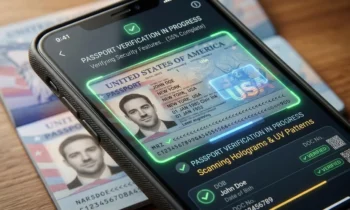
Financial institutions increasingly conduct customer identification remotely, allowing applicants to submit photographs of documents rather than appearing before employees who can physically examine passports, identification cards or other official credentials.
This convenience creates challenges when submitted images look convincing but lack independent proof of government issuance, especially if an automated review system relies mainly on visible document features and accompanying personal information.
A fraudulent image may pass a weak commercial screening process but fail more comprehensive verification, so organizations must understand exactly which checks their technology performs before relying on automated approval.
The VerifTools case highlights the distinction between displaying an apparently official identity document and establishing its authenticity, since a digital representation alone does not verify protected electronic passport data or rightful possession.
Marketplace Activity Extended Beyond Passport Fraud
The broader VerifTools investigation involved various forms of fraudulent identification, including driver’s licenses and residence-related documents, showing that the suspected service appealed to customers whose objectives were not necessarily connected to international travel.
Dutch investigators described the misuse of fraudulent identification images in criminal activities including phishing and bank help-desk fraud, where impersonation can support attempts to deceive victims or gain unauthorized access to financial information.
Consequently, describing VerifTools exclusively as a counterfeit passport operation would obscure the wider identity fraud market that authorities investigated, including digital products intended for commercial settings rather than physical immigration checkpoints.
The criminal significance of any particular document depends on how it was produced, represented and used, requiring investigators to distinguish suspected manufacturing offenses from related identity theft, financial deception or attempted unauthorized account access.
Modern Passport Security Offers Stronger Authentication
Unlike ordinary document images, contemporary electronic passports can contain digitally signed identity information that compatible inspection equipment authenticates through trusted issuing-authority certificates, helping establish whether protected data originated from a legitimate government.
As Amicus International Consulting explains in its examination of passport security and counterfeit detection, physical security features, electronic chip authentication, and biometric comparisons provide complementary methods for evaluating documents that a convincing photograph cannot replace.
An electronic passport may also incorporate polycarbonate identification pages, laser engraving, and specialized optical features, giving trained inspectors opportunities to identify suspicious characteristics that would not necessarily appear in an uploaded image.
However, electronic authentication does not independently establish that a genuine passport remains in the possession of its rightful holder, making identity comparison and appropriate examination of relevant government records important additional safeguards.
Biometric Screening Addresses Identity Impersonation
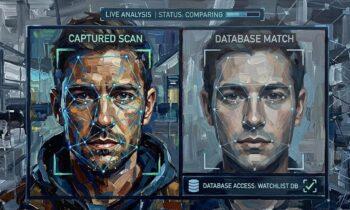
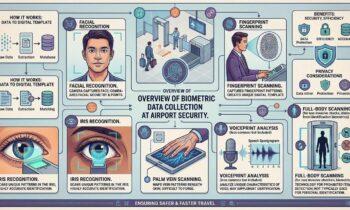
Facial recognition and fingerprint verification can help authorities determine whether an individual matches trusted identity records, strengthening protection against impersonation when someone presents another person’s authentic passport or fraudulent identification information.
These comparisons address different questions than document construction because a correctly manufactured passport can still be misused, while an attractive counterfeit image may not match any genuine government-issued credential.
Automated biometric results nevertheless require careful interpretation because reference image quality, technical limitations and changing appearances can affect comparisons, making qualified human review necessary when a system produces an uncertain finding.
The VerifTools investigation illustrates why reliable identity verification must consider the document, the information it contains and the individual presenting it, rather than treating any single digital image as complete proof.
International Cooperation Sustains the Investigation
The American and Dutch enforcement actions showed how investigators can coordinate seizures across jurisdictions, with U.S. authorities disrupting public marketplace access while Dutch police preserved servers within their national territory.
The subsequent Dutch arrests showed that recovered information could support further inquiries after the initial operation, although investigators still needed to establish the conduct and criminal responsibility of particular marketplace users.
International cooperation remains essential because suspected vendors, buyers, financial institutions and victims may operate in different countries, creating challenges involving evidence preservation, privacy protections and the legal authority required to obtain records.
VerifTools Highlights the Future of Identity Fraud Enforcement
The marketplace’s dismantling demonstrates how counterfeit identification has become integrated into digital financial crime, requiring authorities to address online commercial infrastructure rather than concentrating exclusively on fraudulent passports discovered at international border crossings.
Its reported transaction volume and extensive document generation also illustrate why institutions should distinguish electronically authenticated government credentials from unverified images that merely reproduce official symbols, names and personal information.
For victims, the investigation reinforces the importance of protecting identity records and responding to unauthorized account activity, while investigators continue examining whether recovered marketplace information establishes additional offenses involving identifiable individuals.
Ultimately, the VerifTools case reveals a broader challenge for law enforcement and identity security systems, showing that protecting government credentials increasingly requires coordinated cybercrime investigations, strong electronic authentication, and reliable procedures to prevent impersonation.
Financial Institutions Face Continuing Verification Responsibilities
Banks, cryptocurrency platforms and other regulated organizations must evaluate the reliability of their identity checks, particularly when applicants submit electronic document images without allowing the institution to examine the original government-issued credential.
A successful remote account application does not necessarily show that a passport has passed official cryptographic authentication, so clear communication about verification capabilities matters when organizations select providers and investigate unresolved identity discrepancies.
Financial institutions can strengthen fraud prevention through appropriate customer due diligence, careful treatment of suspicious information and procedures that allow legitimate customers to correct inaccurate records without automatically becoming subjects of unsupported criminal allegations.
The ongoing Dutch investigation also shows why investigators must assess evidence recovered from a criminal marketplace responsibly, since registered user accounts alone do not prove that every account holder knowingly committed an offense.
For international identity security, the enduring lesson is that technology must verify trustworthy credentials while investigators pursue documented criminal conduct, protecting legitimate travelers and financial customers without confusing digital convenience with guaranteed document authenticity.