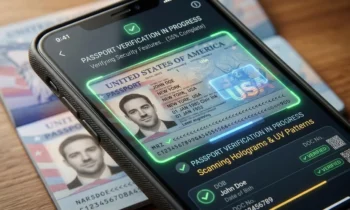
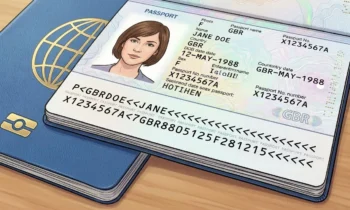
Different traveler categories may face different collection requirements, retention periods and alternatives to automated processing, meaning two passengers using similar airport equipment can encounter substantially different biometric rules because governments distinguish among citizens, residents, visa holders and other foreign travelers under their respective border laws.
WASHINGTON, DC, October 23, 2026, Facial recognition cameras may look identical to travelers moving through an international airport, yet the legal rules governing the photographs and other biometric information collected during those inspections can vary considerably depending upon citizenship, immigration status and the particular government program conducting the processing.
Citizenship Can Change the Legal Purpose of Biometric Collection
Border agencies generally collect biometric information under specific statutory authorities rather than because facial recognition technology itself requires governments to treat every traveler identically, meaning citizenship and immigration classification can affect why information is collected, whether collection is mandatory and how long resulting records remain available.
A government examining one of its own citizens may primarily use facial comparison to confirm that the person presenting a national passport is the legitimate document holder, while the same government can have additional statutory responsibilities when processing foreign nationals entering under immigration requirements.
Those additional responsibilities can include establishing arrival and departure records, confirming compliance with authorized periods of stay, identifying previous immigration encounters and satisfying laws requiring specified foreign travelers to provide biometric information during entry or departure processing.
The result is a border environment in which similar cameras can perform technically comparable facial comparisons, while the surrounding legal consequences differ because the people standing before those cameras fall into different categories under national law.
United States Citizens Receive Different Biometric Treatment in Some Programs
United States Customs and Border Protection uses facial comparison in several international arrival and departure environments, although its published policies distinguish significantly between United States citizens and foreign nationals who fall within statutory biometric entry and exit requirements.
According to U.S. Customs and Border Protection biometric travel information, photographs of United States citizens are generally retained only briefly after CBP confirms citizenship and identity, while images of certain foreign travelers can enter longer-term Department of Homeland Security biometric systems.
CBP documentation explains that photographs of United States citizens are ordinarily destroyed immediately after citizenship is confirmed, with limited technical circumstances allowing temporary retention for up to twelve hours when connectivity or system problems delay proper processing.
The same framework allows substantially longer retention for foreign nationals who must provide biometrics, showing how nationality and immigration status can create dramatically different information lifecycles even when travelers encounter the same underlying facial recognition technology.
A Foreign Passport Can Trigger Different Statutory Requirements
Foreign nationals often cross a border under immigration authorities that do not apply in the same way to citizens returning to their own country, creating legitimate governmental reasons to retain information beyond the immediate confirmation of identity.
Authorities may need to establish when the traveler entered, determine the authorized duration of the visit, confirm whether the person subsequently departed and maintain sufficient records to administer visas, immigration permissions or future applications involving that individual.
Biometrics can strengthen those functions by connecting the immigration record to the traveler rather than relying exclusively upon a name or passport number that could potentially change, be incorrectly recorded or become associated with another document over time.
This does not mean every foreign traveler automatically receives permanent biometric enrollment, because specific obligations depend on national legislation, exemptions, age, immigration category, and the border program under which the individual is processed.
Britain Provides a Clear Example of Different Retention Periods
The United Kingdom currently applies different retention periods to facial images captured at eGates and primary border-control points, depending on whether the traveler is a British citizen or belongs to another nationality category.
Current United Kingdom Home Office biometric retention guidance states that facial photographs of British citizens captured at eGates and primary control points may be retained for up to thirty days, while equivalent images of other nationalities may be retained for up to six years.
The same guidance allows longer retention in certain immigration circumstances, including for foreign nationals subjected to further examination, detention, or asylum procedures, whose facial images may be stored for periods reaching fifteen years or longer in specified cases.
Those differences demonstrate that the visible border transaction alone cannot tell travelers how their biometric information will be managed, because the legal classification attached to the individual can matter more than the appearance of the camera collecting the photograph.
Citizens and Foreign Nationals Serve Different Administrative Purposes
A government ordinarily has an enduring legal relationship with its citizens that differs substantially from the temporary or conditional immigration relationship it maintains with foreign visitors, workers, students, and other noncitizens who present themselves at a border.
For a citizen, the immediate border objective can be to establish nationality and confirm that the person holding the passport is its legitimate bearer, after which some governments have little reason to retain the newly captured inspection photograph for immigration management.
For a foreign visitor, however, authorities may need the crossing information to calculate permitted stay periods, identify overstays, evaluate subsequent applications, and determine whether the traveler followed earlier immigration conditions, giving biometric records an ongoing administrative purpose after the traveler leaves the checkpoint.
These different governmental purposes help explain why retention disparities can exist without necessarily reflecting differences in the technical accuracy or security characteristics of the facial recognition equipment used for each category.
Europe’s Entry/Exit System Focuses Specifically on Non-EU Travelers
Europe provides another major example of citizenship and nationality determining biometric obligations because the Entry/Exit System specifically registers eligible non-European nationals traveling for short stays across the external borders of participating European countries.
The European Commission explains in its Entry/Exit System information that the system records travel-document information, entry and exit information, facial images, and fingerprints for covered non-EU nationals, and also records refusals of entry in the centralized system.
The EES became fully operational on April 10, 2026, after a progressive rollout began in October 2025, replacing routine passport stamping for eligible short-stay travelers with digitally recorded border movements supported by biometric identity information.
Under that system, European Union citizens are not processed as ordinary short-stay third-country nationals, illustrating clearly how citizenship determines whether a traveler becomes subject to a major biometric entry and exit database in the first place.
Retention Can Depend on Compliance After Entry
Immigration status can continue to affect biometric records after a traveler crosses the border because some systems link retention periods to whether the person departed within the authorized period or became associated with another immigration outcome.
European EES rules generally provide three-year storage periods for ordinary entry, exit and refusal records, while information involving travelers for whom no exit has been recorded after the authorized stay expires can remain for five years under the governing regulation.
That structure shows how biometric retention can depend not only on nationality at the time of collection but also on later immigration events, because the government may retain records longer when they remain relevant to determining an unresolved or potentially unlawful stay.
The camera therefore represents only the collection point for information whose later lifecycle can depend upon legal developments occurring weeks, months or years after the traveler originally presented a passport at the border.
Citizenship Can Also Affect Whether Alternatives Are Available
Some biometric border programs offer citizens alternatives to automated facial processing that foreign nationals subject to mandatory biometric entry or exit legislation may not have, although the exact options vary by country, checkpoint, and traveler category.
A citizen who does not wish to use an automated facial comparison process may sometimes request a traditional inspection by a border officer, while a foreign traveler legally required to provide biometrics cannot necessarily avoid the underlying collection obligation simply by choosing a staffed inspection lane.
This distinction matters because opting out of a particular camera workflow and being exempt from biometric collection are not the same, even though travelers sometimes use the phrases interchangeably when discussing automated airport processing.
A person might decline one automated interface and still undergo legally required identity verification elsewhere, particularly where immigration legislation requires biometric enrollment or verification as a condition associated with entry, departure, visa processing, or another government service.
Permanent Residents Can Occupy Their Own Category
Permanent residents frequently fall between citizens and ordinary short-term visitors because they possess substantial immigration rights within the country while remaining legally distinct from citizens for some border, nationality and biometric purposes.
A government can consequently establish special processing rules for permanent residents, including dedicated inspection lanes, separate documentation requirements or different biometric procedures from those applying to temporary visitors entering under tourist or business permissions.
The exact treatment varies substantially by jurisdiction, so it’s inaccurate to assume that long-term residence automatically grants either citizen-level biometric protections or the same collection requirements as those imposed on someone arriving for a brief visit.
Travelers should therefore consult the rules for their actual legal status rather than relying solely on nationality to determine whether biometric processing is mandatory and what retention policy applies to their information.
Dual Citizens Can Encounter Different Rules Depending on the Passport Presented
People with more than one citizenship create additional complexity because the government processing the border crossing can treat the traveler based on the nationality established by the passport or other citizenship documentation presented during that interaction.
Many countries require their own citizens to enter or leave using national travel documents, so a dual citizen’s biometric treatment can differ depending on whether they cross the border of a country whose citizenship they possess or enter another state purely as a foreign national.
The underlying face remains identical, but the legal identity presented to the border authority changes the statutory framework governing that biometric capture, showing again that information governance depends on law and immigration status rather than physical facial characteristics.
This interaction matters especially when comparing privacy policies internationally because the same individual can receive citizen treatment at one border and foreign-national treatment several hours later after flying to another country.
Visa Holders Can Have Previously Enrolled Biometrics
Foreign travelers requiring visas may have already provided facial photographs, fingerprints, or other identity information during the application process, giving border authorities access to an existing biometric reference before the person arrives at an airport inspection point.
At the border, a newly captured image can therefore support verification against passport or immigration information already associated with the traveler’s application, potentially strengthening confidence that the person who obtained the visa is the same individual now seeking entry.
That workflow differs from a citizen returning with a passport, whose live photograph may be compared primarily with the authoritative portrait in the travel document, although individual government systems can use additional references depending on their legal authorities.
Earlier enrollment also helps explain why deleting a newly captured airport image does not necessarily mean the government lacks other biometric records, because visa and immigration databases can maintain photographs collected independently under separate retention rules.
Refugees and Asylum Applicants Can Face Different Requirements Again
Travelers entering asylum, refugee, or humanitarian procedures may be subject to specialized biometric requirements intended to establish identity, prevent duplicate applications, manage immigration cases, and support government responsibilities that extend far beyond an ordinary airport arrival.
As a result, those records can be retained longer than routine eGate photographs because the biometric information becomes part of an ongoing immigration proceeding rather than remaining solely a temporary tool used to verify a passport holder.
United Kingdom guidance, for example, specifically distinguishes foreign nationals involved in further examination, detention or asylum processing from ordinary travelers, permitting longer facial-image retention where the governing immigration regulations authorize those records.
This shows why broad statements claiming a country deletes airport photographs after a set number of days can be misleading unless they specify which traveler category and immigration process the retention rule covers.
Children Can Be Subject to Different Biometric Rules
Age represents another classification that can interact with citizenship because governments commonly establish special biometric requirements for children, including minimum ages for fingerprints, parental involvement requirements and procedures reflecting the changing physical characteristics of younger travelers.
A country can therefore treat two foreign travelers differently even if they share the same nationality, if one is an adult and the other falls below an age threshold for a particular biometric collection requirement.
Facial photographs may still be collected when fingerprints are not required, depending on the system and legal framework, underscoring that biometrics encompasses several distinct characteristics whose collection rules need not be identical.
Families moving through an automated border should follow the instructions applicable to each member rather than assuming every traveler in the family will complete the same biometric steps.
Citizenship Does Not Determine Facial Recognition Accuracy
The recognition algorithm itself does not gain legal knowledge from citizenship because its technical purpose remains comparing facial information, meaning nationality generally affects the governmental processing around the algorithm rather than changing the fundamental mathematical concept of facial similarity.
However, border agencies must test biometric systems across varied populations because recognition performance can differ according to image quality, age, demographic characteristics, and other factors unrelated to a person’s formal nationality designation.
This distinction matters because citizenship-based policy differences arise from legal authority and immigration functions, while technical performance questions concern whether the recognition system operates accurately and fairly across the people it serves.
Combining these separate issues can obscure meaningful debate about biometric borders, particularly when legal retention differences are mistakenly described as evidence that the recognition algorithm itself analyzes nationality when processing facial characteristics.
Database Access Can Also Depend on Traveler Category
A government can consult different information systems depending upon whether the traveler is a citizen, permanent resident, visa holder or temporary visitor, because each category can have different records relevant to lawful border processing.
A citizen’s passport record may provide sufficient authoritative information for one aspect of inspection, while a visa holder may have immigration permissions and earlier application records that the border authority must verify before determining whether entry conditions remain satisfied.
Foreign-national entry and exit programs can generate additional history that authorities consult during later crossings, whereas comparable immigration overstay calculations would generally have no purpose for citizens returning to their own country.
Facial recognition therefore operates in an information environment shaped largely by legal status, even though the camera may perform an apparently identical photographic comparison for everyone passing through the inspection area.
Privacy Rights and Deletion Requests Can Differ in Practice
Travelers can possess legal rights to seek access, correction or deletion of personal information under applicable privacy legislation, but those rights frequently contain exceptions allowing governments to retain data required for immigration administration, law enforcement or other authorized public purposes.
Citizenship can affect the practical outcome because an agency may have less statutory justification to retain one citizen’s temporary eGate image than to maintain a foreign national’s biometric immigration record required by legislation governing entry and departure.
That does not mean foreign nationals lack privacy protections, because governments remain responsible for processing biometric information according to applicable laws, security requirements, retention schedules and limitations on authorized access.
The key distinction lies in the purpose and authority supporting continued retention, which can differ based on a person’s legal relationship with the country, even though all travelers have legitimate interests in the security of their biometric information.
Strong Passport Security Does Not Create Uniform Data Rules
Electronic passports use internationally standardized technologies to improve document authentication and identity verification, but those technical standards do not require every government to retain border photographs for the same periods or apply the same biometric rules to citizens and foreigners.
Amicus International Consulting explains the relationship among document features, chip authentication and facial comparison in its coverage of modern passport security, where independent safeguards work together to establish confidence in both the document and the person presenting it during inspection.
Data retention becomes a separate policy question after or alongside those security checks, leaving national governments to decide which biometric records remain necessary under their own immigration, citizenship, and privacy legislation.
As a result, two countries using passports that meet the same international technical standards can still set dramatically different policies on facial-image retention, mandatory enrollment, and alternatives to automated processing.
Similar Airport Cameras Can Produce Different Privacy Outcomes
For passengers, perhaps the most important lesson is that the physical appearance of an eGate reveals remarkably little about what happens to biometric information after the camera captures the traveler’s face and completes the automated comparison.
One traveler can have a photograph deleted quickly because the government has confirmed that person’s citizenship, while another traveler at the same checkpoint can have a facial image retained for years because immigration legislation requires an ongoing biometric entry-or-exit record.
A third traveler can enter secondary examination and generate an entirely different category of record, showing how the pathway after the initial border transaction can also change the information-retention rules that ultimately govern the captured image.
Understanding biometric borders therefore requires examining citizenship, immigration status, and statutory purpose together, rather than assuming facial recognition technology imposes one universal data policy on everyone who happens to look into the same airport camera.
Citizenship Is Only One Part of the Biometric Equation
Citizenship can significantly influence how border agencies collect, retain, and use biometric information, but it operates alongside other variables including residency status, visa category, age, immigration history, type of crossing, and the specific legal authority under which the government processes the traveler.
The growing use of automated gates therefore does not eliminate traditional distinctions within immigration law, because digital technology increasingly applies those distinctions through interconnected databases and biometric systems rather than relying solely upon stamps, paper forms and visual inspection.
For travelers concerned about privacy, the most reliable approach remains reviewing the current biometric policy published by the authority controlling the border crossing and determining how it applies to their nationality and immigration status.
As biometric travel systems continue to expand internationally, understanding these legal categories will become increasingly important because the key question is no longer simply whether an airport photographs travelers, but why it photographs each category of traveler and what the government may legally do with that information afterward.