Identity matching operates alongside document verification, eligibility checks and other immigration procedures, meaning a successful biometric comparison can establish that a traveler resembles an authoritative reference photograph without independently determining whether that individual has a legal right to enter a country.
WASHINGTON, DC, October 26, 2026, Facial recognition has become one of the most visible technologies at modern international borders, yet the photograph captured at an airport eGate represents only one component of a much broader inspection process that ultimately determines whether a traveler may lawfully enter a country.
Facial Recognition Primarily Answers an Identity Question
When a border camera captures a traveler’s face and compares it with the portrait stored in an electronic passport or another authoritative government source, the principal purpose of that comparison is to determine whether the individual standing before the camera appears to be the person associated with the reference identity.
Facial recognition software does this by extracting mathematical characteristics from the live photograph and the reference portrait, calculating their similarity, and providing the border system with information that can support an automated decision about whether those two facial representations probably belong to the same person.
That determination remains fundamentally different from deciding whether the traveler satisfies immigration law, because establishing someone’s identity does not establish that the identified person possesses an appropriate visa, remains within permitted immigration conditions, has no applicable inadmissibility issue or otherwise qualifies for entry.
A Strong Facial Match Does Not Create a Right of Entry
A traveler can produce an extremely strong biometric match with the photograph in a legitimate passport while still facing an immigration problem unrelated to whether facial recognition technology identified that individual correctly.
Someone could present an authentic passport belonging unquestionably to that traveler but lack a required visa, possess an expired authorization, face a statutory immigration restriction or require additional examination concerning the purpose and circumstances of the intended visit.
Facial recognition therefore helps establish who is presenting the document, while immigration authorities must separately evaluate what that identified person is legally permitted to do under the laws, policies, and entry requirements that apply at the particular border.
Passport Authentication Answers Another Question
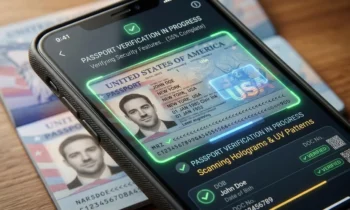
Before relying heavily on information in an electronic passport, sophisticated inspection systems can verify the digital signature protecting the passport chip, showing that the issuing authority created the protected information and that it has not been altered since.
The International Civil Aviation Organization’s ePassport validation framework explains that proper chip validation lets border authorities confirm that a bona fide authority issued an ePassport and that protected biographical and biometric information has not changed since issuance.
That cryptographic process strengthens confidence in the passport as an identity credential, but even perfect document authentication cannot independently establish whether the legitimate holder of that legitimate document satisfies every immigration requirement imposed by the receiving country.
Document Authenticity and Holder Identity Must Work Together
Modern border inspection therefore involves at least two closely connected identity questions, because authorities need confidence that the travel document itself is genuine while also determining whether the individual presenting that document is its legitimate holder.
Electronic chip authentication can support the first question by validating digitally signed passport information, while facial comparison supports the second question by comparing the traveler’s current appearance with the authoritative portrait contained within or associated with the authenticated document.
A successful result from both processes can create substantial confidence that the government is examining the correct traveler using a genuine credential, yet neither result by itself resolves the separate immigration question concerning whether that person qualifies for admission.
Immigration Eligibility Requires Additional Information
Border authorities commonly evaluate information extending far beyond the traveler’s photograph, including citizenship, visa status, immigration permissions, intended duration of stay, previous immigration history and other requirements established under the receiving country’s domestic laws.
Depending upon the jurisdiction and circumstances, officers or automated systems may also consider whether the traveler possesses required supporting documentation, whether the declared purpose of travel corresponds with the authorization being used and whether additional examination is legally or operationally required.
These determinations involve rules that facial recognition algorithms are neither designed nor authorized to resolve, illustrating why biometric matching should be understood as an identity-verification tool operating within immigration processing rather than as the authority making admission decisions.
Visa Checks Operate Separately From Facial Comparison
Many international travelers need visas or electronic travel authorizations before reaching a border, and those permissions can include conditions on nationality, travel purpose, validity dates, authorized activities, or limitations set by the destination government.
A facial recognition system might confirm with exceptionally high confidence that the traveler matches the passport portrait, but the immigration system can still identify that a required authorization is missing, expired, revoked, or inconsistent with the proposed travel.
Conversely, a valid visa does not eliminate the need for identity verification because authorities still need confidence that the person using that authorization is the individual for whom the underlying passport and permission were issued.
Automated Gates Connect Several Processes
The simplicity of an airport eGate can obscure the number of separate checks occurring behind the screen, because a traveler may present a passport, face a camera and receive an automated result without seeing the electronic processes connecting those actions.
Depending on the jurisdiction and system architecture, the gate can read passport information, access the electronic chip, authenticate protected data, retrieve a trusted facial portrait, capture the traveler, conduct a facial comparison, and consult immigration systems before deciding whether to continue automated processing.
ICAO documentation explains that automated border control systems can use an authenticated ePassport photograph for facial recognition, showing how document validation and biometric comparison can work together while remaining technically distinct components of the inspection process.
Watchlist Screening Serves a Different Purpose
Government border systems can also conduct screening against relevant law enforcement, national security, immigration or travel databases, creating another layer that operates independently from the mathematical question of whether the traveler’s live face resembles a passport photograph.
A traveler whose face matches perfectly can still require additional inspection when another authorized government system returns information that requires officer attention, just as a person with no relevant database issue can still be referred when biometric identity verification remains uncertain.
The key distinction is that facial recognition establishes identity similarity, while screening systems review government records linked to that established or claimed identity under the legal authorities and policies governing the border agency.
Biometric Matching Does Not Search Every Database Automatically
Popular descriptions sometimes imply that a border camera recognizes a traveler and simultaneously searches every government or international database in existence, although actual border architectures separate biometric comparison, identity resolution, document processing and database screening into distinct technical and legal functions.
A one-to-one facial verification process can simply compare the person standing before the camera with the passport photograph presented by that same traveler, without performing the broader one-to-many identification function often associated with large facial recognition databases.
This difference matters because matching one live photograph against one trusted passport portrait answers a narrower question than identifying an unknown person from among many possible candidates, even though both processes use related facial recognition technologies.
Similarity Scores Are Not Immigration Scores
Facial recognition algorithms generally produce measurements reflecting similarity between biometric representations, and those values should not be confused with a percentage indicating whether a traveler deserves admission, poses a threat or satisfies the legal requirements for entry.
The United States Department of Homeland Security has described facial recognition systems as producing similarity information from compared images, while earlier Customs and Border Protection documentation specifically explained that facial comparison assists officers during inspection rather than replacing officer discretion.
A high biometric similarity score therefore means the software found substantial correspondence between the facial images under its particular algorithm and configuration, while immigration eligibility remains governed by different information, authorities and decision-making standards.
Facial Recognition Can Reduce Imposter Risk
One of facial recognition’s most important border-security functions involves reducing the risk that someone presents an authentic travel document legitimately issued to another person whose appearance appears sufficiently similar to avoid immediate detection through ordinary visual inspection.
United States border authorities have previously described one-to-one facial comparison specifically as a mechanism intended to determine whether travelers presenting passports are the individuals to whom those documents were legally issued, supplementing established screening procedures rather than replacing them.
This illustrates the appropriate role of biometrics particularly clearly, because the technology strengthens confidence in the connection between traveler and document while leaving the broader assessment of immigration admissibility to the surrounding inspection framework.
Failed Recognition Does Not Automatically Mean Fraud
An unsuccessful automated facial comparison should not automatically be interpreted as evidence that a traveler used a fraudulent passport, because poor lighting, unusual posture, image quality, aging, camera positioning, and other legitimate circumstances can affect biometric performance.
Automated border systems can respond to uncertain comparisons by obtaining another photograph or directing the traveler toward an officer, allowing additional identity verification before authorities determine whether the discrepancy reflects an innocent technical issue or something requiring deeper investigation.
This escalation process is important because responsible biometric systems should create opportunities for review rather than transforming every algorithmic uncertainty into an accusation, particularly when international borders serve travelers with enormously varied appearances, ages and physical circumstances.
Officer Review Remains an Important Safeguard
Even highly automated border environments retain human involvement because officers can evaluate circumstances that cannot be reduced reliably to one facial similarity calculation, particularly when immigration questions require explanation, additional documentation or interpretation under applicable law.
An officer can consider the passport, traveler, immigration history, declared purpose, supporting records and information returned by government systems together, providing a broader decision context than the facial recognition algorithm receives when comparing two images.
CBP documentation on facial processing explicitly states that facial comparison assists officers and does not replace their discretion in the inspection process, showing the institutional distinction between biometric assistance and the legal authority exercised during border inspection.
Secondary Inspection Can Resolve Uncertainty
Travelers referred from automated processing may undergo secondary inspection when border authorities require additional information concerning identity, documentation, immigration eligibility or another matter that could not be resolved satisfactorily during the initial automated or primary examination.
Secondary inspection does not necessarily indicate wrongdoing because border authorities routinely need additional time to examine documents, clarify circumstances, verify records or resolve technical inconsistencies that cannot be addressed efficiently while maintaining normal passenger flow.
The referral mechanism therefore protects both security and operational efficiency, allowing routine cases to move through automated processing rapidly while directing uncertain circumstances toward personnel capable of conducting a more detailed evaluation.
Citizenship Does Not Eliminate Identity Verification
Citizens and noncitizens can encounter biometric identity checks even though their legal positions at the border may differ substantially, because governments still need confidence that the person presenting a citizenship document is the individual legitimately associated with that credential.
Facial recognition can help make that determination without deciding the underlying legal rights attached to citizenship, residency, or immigration status, which national law governs rather than mathematical similarity between photographs.
The same technology can therefore support several legally distinct traveler categories, but the consequences of a successful identity match depend on the identified individual’s immigration status and statutory rights.
Departure Systems Have Different Objectives
Facial recognition also appears during international departure processing, where the objective can include confirming that the individual leaving a country corresponds with the traveler expected from airline, immigration or entry records rather than deciding whether that person should be admitted.
This again shows why facial recognition cannot be equated with border admission, because similar biometric technology can support arrival verification, departure confirmation, airline boarding, and other identity processes with legal purposes that differ considerably.
Understanding the surrounding workflow is therefore essential before interpreting what an airport facial recognition camera actually does, since the camera’s visible appearance reveals little about the specific government or transportation process behind it.
Airline Biometric Checks Are Not Border Admission Decisions
Airlines and airport operators can also participate in biometric travel programs, particularly where facial comparison assists passenger identification during bag drop, security processing or boarding, although those commercial or operational checks should not be confused automatically with sovereign immigration admission.
A biometric boarding process may determine that the person approaching an aircraft corresponds with an expected passenger identity, while the government’s immigration systems separately determine whether all applicable border requirements have been satisfied.
The presence of facial recognition at several stages of an airport journey therefore reflects the usefulness of identity matching, not evidence that every camera runs the same database queries or exercises the same governmental authority.
Electronic Passports Strengthen the Reference Image
The facial comparison becomes more meaningful when the system can confidently rely on the authoritative portrait used as its reference, which is why authenticating electronic passport information is an important complement to biometric matching.
ICAO explains that validating an electronic passport’s digital signature provides confidence that protected chip information, including the facial image, originated from the issuing authority and has not been altered after issuance, creating a stronger foundation for subsequent identity comparisons.
The relationship among these security layers is examined further in Amicus International Consulting’s guide explaining how modern passport security helps detect counterfeits and protect identity, which describes how physical, electronic and biometric safeguards complement one another during modern document verification.
Authentic Documents Can Still Be Misused
A sophisticated border inspection must consider more than counterfeit passports because an entirely authentic document can still create security concerns when someone other than the rightful holder attempts to use it during international travel.
Facial recognition provides an important defense against that scenario by helping authorities determine whether the presenter’s biometric characteristics match the legitimate holder’s reference image, strengthening a comparison that has historically relied heavily on human visual judgment.
Once that connection is established, however, authorities still need to determine whether the genuine passport holder meets the destination’s immigration requirements, reinforcing the separation between identity verification and admissibility.
Legal Decisions Require Legal Authority
Algorithms calculate biometric similarities, authenticate digital signatures, and help government systems retrieve relevant information, but national immigration legislation, regulations, and authorized government procedures provide the legal authority to admit, refuse, refer, or otherwise process travelers.
This distinction matters more as artificial intelligence and automation expand because describing a facial recognition system as deciding who enters a country can incorrectly attribute legal authority to technology that actually supplies evidence to a larger decision process.
Automation can execute established rules and let routine travelers proceed when predefined conditions are met, yet those rules ultimately reflect government policies and legal authority rather than independent judgments by the camera itself.
Border Security Depends on Layers Rather Than One Test
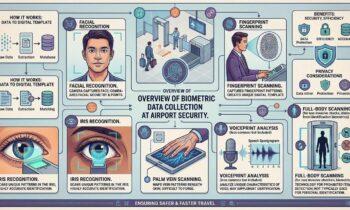
A modern inspection can therefore involve document authentication, biometric holder verification, immigration permission checks, database screening, presentation attack detection and officer assessment, with each component addressing a different vulnerability within the overall process.
If authorities relied exclusively upon facial recognition, they might establish that a traveler resembles a passport photograph while learning virtually nothing about whether the document was electronically authentic, whether the traveler possessed necessary authorization or whether another legally relevant issue required examination.
Conversely, relying solely on passport authentication can show a document is genuine without establishing that the person carrying it is the legitimate holder, which is why modern systems combine complementary security mechanisms.
Automation Works Best When Its Role Is Clearly Understood
The increasing speed of airport eGates can create the impression that one camera makes an instantaneous decision about the traveler, when the visible facial capture actually represents only the human-facing portion of a much larger digital inspection architecture.
Within seconds, separate systems may authenticate travel-document information, evaluate facial similarity, review immigration permissions and identify whether additional examination is required, allowing routine passengers to proceed without exposing every individual technical transaction occurring behind the interface.
That efficiency should not obscure the fundamental distinction between confirming identity and granting admission, because the first establishes who the traveler appears to be while the second applies the receiving country’s laws and procedures to that identified individual.
Facial Recognition Supports the Decision Rather Than Replacing It
Modern biometric border systems can verify travelers rapidly and accurately, yet facial recognition is best understood as one evidentiary tool within a layered inspection structure, not an autonomous authority controlling international entry.
A successful match provides strong confidence that the traveler matches an authenticated passport portrait, while document checks, immigration databases, eligibility requirements, and authorized officers determine whether that person may continue through the border.
As automated processing expands, maintaining this distinction will remain essential for understanding both the capabilities and limits of airport biometrics, because recognizing a face can help establish identity while lawful admission ultimately requires substantially more than a successful photograph comparison.
For travelers seeking to understand these increasingly interconnected systems, the most useful approach is to view facial recognition, electronic passport validation and immigration screening as separate but coordinated processes that collectively allow modern borders to verify identity efficiently without reducing a complex legal admission decision to a single algorithmic match.