More biometric gates promise speed, but raise questions about errors, appeals, and retention.
WASHINGTON, DC
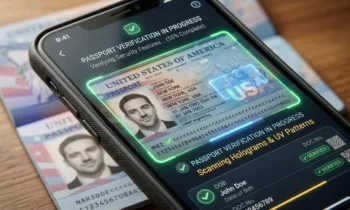
Airports and land borders are quietly being redesigned around a new premise: the fastest way to move people is to stop asking them who they are and start verifying what they are. A face at a gate, a fingerprint at a kiosk, a match in a database, and the barrier opens.
Governments describe the shift as modernization, a way to restore traveler confidence after years of disruption, fraud concerns, and rising volume. For many travelers, it will feel like a convenience upgrade, fewer questions, shorter lines, and less human friction. For others, it will feel like an expansion of state memory into ordinary life, with new worries about errors, appeals, and how long biometric data is kept once a trip is over.
In Europe, the push is especially visible as the bloc replaces passport stamping with a biometric entry and exit framework for non-EU travelers, pairing fingerprints and facial images with digital travel records at external borders. The European Commission’s explainer on how the new digital borders system works captures the official argument in plain terms: more reliable identity checks, faster repeat crossings, and better detection of overstays and document misuse. That overview is here: How the new digital borders system works.
It is a tidy story, and it is only half the story.
The other half is what happens when the match fails, when a traveler’s identity is real but the system cannot see it, or when it sees the wrong person.
The speed promise
The global travel industry has a simple demand: make borders faster without making them weaker. That is the sales pitch for biometric gates.
In practice, biometrics deliver speed in two ways.
First, they reduce the amount of human labor required to confirm identity. A staffed booth can process one traveler at a time, with a conversation, a document check, and discretion. A bank of automated gates can process many travelers quickly, especially repeat travelers whose biometrics are already enrolled and whose documentation is clean.
Second, they reduce ambiguity. Names are messy. They are transliterated differently across languages. They change through marriage or legal updates. They are entered incorrectly by airline agents. They have diacritics systems cannot handle. Biometrics, when captured well, cut through that noise. A face is still a face. A fingerprint is still a fingerprint.
This is why border agencies increasingly describe biometrics as “trust infrastructure.” They are building a standard identity handshake that works across millions of transactions, without relying on a person’s ability to tell a coherent story at a counter.
For policymakers, the goal is not simply shorter lines. It is fewer blind spots. A biometric system is meant to make it harder to travel under an alias, harder to use a fraudulently obtained document, and harder to exploit gaps between jurisdictions.
But as borders become more automated, travelers are learning a new lesson. The trade for speed is that the system becomes less forgiving when something goes wrong.
The friction reality
When biometric systems fail, they fail loudly.
A stamp error is a nuisance. A misspelled name can be corrected. A human officer can listen, compare documents, and make a judgment call.
A biometric mismatch can stop the process entirely. It can send the traveler into secondary screening. It can trigger a watchlist check that would not have happened at a staffed booth. It can create a record that follows the traveler into future trips, even if the issue was a one-time technical failure.
Most travelers will never experience this. Many already use facial gates without incident. The risk, however, is not spread evenly. Certain groups are more likely to be affected, including travelers with facial changes due to medical treatment, age progression, or injury, travelers whose fingerprints are worn due to manual labor, elderly travelers, and those with documentation histories that contain inconsistencies from old data entry practices.
There is also a structural issue: a biometric gate is not truly a single decision point. It is the front end of a decision chain that includes image capture quality, algorithm confidence thresholds, database linkage, and policy rules about what happens when confidence is low.
A traveler does not see those layers. They see the red light.
Errors are not the only concern. Appeals are the bigger issue.
In a staffed system, a traveler can ask a question and get an explanation. In an automated system, the traveler is often routed to a human only after the machine has already labeled the encounter as a risk event. That changes the tone. It can raise stress. It can make innocent mistakes feel like suspicion.
The question governments have not fully answered, at least not in a way travelers can easily understand, is what the appeals process looks like when the system is wrong.
What happens if you are repeatedly misidentified?
What happens if your biometric record is corrupted?
What happens if your identity is mistakenly linked to another person’s travel history?
What happens if the system flags you and you cannot get a clear explanation because the logic is classified, proprietary, or shielded as security sensitive?
These are not abstract worries. They are the practical questions that determine whether biometric borders feel like convenience or coercion.
Retention is where trust is won or lost
The data question is the emotional core of the biometric border debate. People can accept a face scan if they believe it is ephemeral. They tend to resist if they believe it becomes permanent.
Governments often say they retain biometric information only as long as necessary, and that security measures are in place. They also argue that the data is already collected in many contexts, such as passports, visas, and law enforcement databases. From that perspective, border biometrics are not a new category, just a new workflow.
Travelers, however, tend to care less about categories and more about control.
How long is the data retained?
Who can access it?
Is it shared with other agencies?
Can it be used for purposes beyond border processing?
Can it be used to train systems?
Is there a meaningful way to correct errors?
Can you see what is stored about you?
If you opt out, what happens to your travel experience?
Those questions do not have one global answer. Rules vary by jurisdiction, and even within a jurisdiction, they vary based on whether the traveler is a citizen, a resident, a visitor, or someone applying for a visa.
That variability itself becomes a trust problem. Travelers move across borders, but their rights do not travel in the same predictable way. What is deleted quickly in one region may be retained longer in another. What is easily appealed in one system may be difficult to challenge elsewhere.
Why governments are expanding biometrics anyway
The policy logic is not hard to see. The travel ecosystem has been dealing with two parallel pressures.
One is volume. Travel demand has rebounded and, in many corridors, it keeps growing. More people want to move, and they want to move faster.
The other is integrity. Governments have been facing persistent document fraud, alias travel, and cases where genuine documents were obtained through false identity narratives. They have also been dealing with public pressure around migration controls, overstays, and border credibility.
Biometrics promise an answer that feels modern and politically defensible. If the system is anchored to the body, it becomes harder to claim that borders are porous or that identities cannot be verified.
Biometrics also help governments tell a story about fairness. Automated gates are often framed as reducing discretion. The system applies the same rules to everyone, with fewer subjective decisions at the booth.
In practice, that fairness can be real, but it is not automatic. Bias can enter through training data, capture conditions, and policy choices. Even a technically neutral system can create unequal outcomes if certain travelers are consistently more likely to be flagged.
That is why governments keep returning to the same tension. They want the benefits of biometric certainty without the political blowback of biometric overreach.
The quiet shift from documents to identity graphs
The deeper change is not the gate itself. It is the model of identity behind the gate.
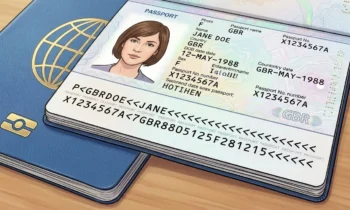
For decades, travel identity was document-centric. A passport was the anchor. If the passport was genuine and the photo matched, the system moved forward.
In 2026, identity is increasingly graph-centric. A person is understood as a linked set of records: travel history, visa decisions, entry and exit events, watchlist associations, prior biometric enrollments, and in some cases, administrative and law enforcement interactions.
Biometrics help build those links. When a traveler uses a gate, they are not only being verified in that moment. They are being attached to a growing history of verified encounters.
That has obvious security value. It also creates a new kind of vulnerability. If the graph is wrong, it is not just one trip that is affected. It can be many.
This is why error correction matters more now than it did in the stamp era. In the old model, a mistake might live on one page of a passport. In the new model, a mistake can live inside a system that influences future decisions invisibly.
What travelers can do in a biometric border world
Most people cannot control how a government builds border systems. They can control how prepared they are to deal with them.
A practical approach starts with documentation hygiene. Ensure names and dates of birth are consistent across key documents. If there are lawful name changes, keep certified supporting records accessible. If passports have been renewed with changes in formatting or name order, be ready to explain the continuity.
It also means planning time differently. Biometric systems are often fastest for repeat travelers and slowest for first time enrollments. The first time through a new system can take longer. That is not a sign of personal suspicion. It is how the system builds its baseline.
Most importantly, travelers should assume that the system’s output is not always the full story. If you are repeatedly flagged, treat it as a technical and administrative problem that needs to be resolved, not as an argument to keep trying the same gate hoping it will work next time.
How institutions think about trust, and why it matters
Beyond government policy, the biometric shift is reshaping how private institutions think about identity. Airlines want lower liability. Banks want fewer compliance surprises. Employers want verifiable backgrounds. Landlords want clean documentation. Biometric border systems create signals that institutions can interpret as credibility, or as risk.
That is why lawful identity continuity has become more valuable. The people who experience the least friction are not necessarily those with the most passports or the cleverest travel strategies. They are the ones whose records line up cleanly across systems and jurisdictions.
Amicus International Consulting has been emphasizing that point in its advisory work, particularly for globally mobile clients who want lawful speed without triggering unnecessary scrutiny. The firm’s approach is grounded in record continuity, documentation integrity, and compliance-forward travel planning, not in tactics designed to fragment identity. An overview of that services lens is here: New Legal Identity.
The trust message governments need to deliver
Governments are asking travelers to accept a new kind of border, one that feels less human and more automatic. If they want travelers to trust it, they have to do three things well.
They need clear error handling. If a traveler is incorrectly flagged, the path to correction must be understandable, timely, and real.
They need transparent retention logic. Travelers do not need a technical treatise. They need a clear explanation of what is kept, for how long, and who can access it.
They need credible oversight. Independent review, audit trails, and accountability for misuse are not luxuries. They are the foundation of legitimacy when systems become more powerful.
This is where the biometric expansion could fail if governments treat it as a purely technical rollout. Trust is not built by installing gates. Trust is built by proving that when the system is wrong, people have recourse.
What to watch in 2026
The next year is likely to bring two headline dynamics.
The first is the push for more biometric coverage, more gates, more corridors, more automated enrollment, more places where a face is the ticket.
The second is the pushback around governance, especially after the first wave of real-world friction: long queues during initial enrollments, false match stories that go viral, and political debates about retention and secondary use.
Those tensions will show up in ongoing reporting, especially around new deployments and early operational failures, including the pressure points at high-volume European corridors. A continuously updating feed tracking these developments is here: biometric border gates fingerprints facial recognition 2026.
The bottom line is simple. Biometric borders are expanding because governments believe they are the best available tool to rebuild traveler trust while increasing security. Whether they succeed will depend less on the cameras and scanners and more on the human safeguards around them: error correction, appeals, and limits on retention. In 2026, the gates may open faster, but trust will only grow if people believe they can challenge the machine when it gets them wrong.