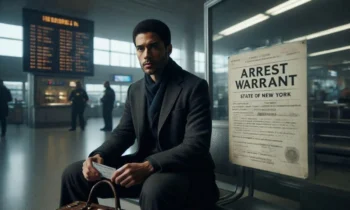
Stonehouse used the names of deceased constituents to obtain false travel documents before vanishing overseas.
WASHINGTON, DC, John Stonehouse’s 1974 fake death is remembered for the image of clothes left on Miami Beach, but the deeper scandal began earlier, when a British lawmaker used the names of dead men to build the false identities that carried him toward Australia.
The false passports made the fake death possible.
Stonehouse did not simply walk into the surf and disappear, because his staged drowning depended on months of preparation, false documents, financial movements and identities that could support travel after the world believed he was dead.
The former Labour minister had already created alternate identities before the Miami Beach scene, reportedly using the names Joseph Markham and Donald Mildoon, deceased men whose records gave him the raw material for a second life.
Those names mattered because a fake death without supporting documents would have been only a short-lived mystery, while a false passport could move a fugitive across borders and into a new legal environment.
Stonehouse’s use of dead men’s identities added a grim moral dimension to the scandal, because real deaths were converted into tools for a living politician’s escape from debt, exposure and prosecution.
The story later became a landmark British political scandal because it showed how identity fraud, financial desperation and public office could collide in one carefully staged disappearance.
The identities were not random disguises; they were administrative weapons.
A false name only becomes useful when it can interact with institutions, including banks, passport offices, hotels, airlines, police checks and immigration authorities that expect identity documents to reflect legal reality.
Stonehouse understood that he needed more than a casual alias, because he had to create identities strong enough to open accounts, move funds, travel internationally and present himself as someone other than a sitting British MP.
The names of deceased constituents offered a dangerous advantage because they had once belonged to real people, making the identities appear less obviously invented than names drawn entirely from imagination.
That method exploited the trust built into civil-registration systems, where birth and death records are supposed to preserve truth rather than provide material for fraud.
The scandal showed that identity theft does not always begin with digital hacking, because paper records, death entries and old bureaucratic gaps can become tools for criminal reinvention.
The Day of the Jackal influence gave the scheme a chilling literary echo.
Stonehouse’s method was widely linked to the Frederick Forsyth thriller The Day of the Jackal, in which a professional assassin exploits the identity of a dead child to obtain false documents.
That connection gave the case a strange cultural resonance, because a sitting politician appeared to have taken practical inspiration from fiction while preparing a real-life disappearance.
The literary echo also made the scheme feel more calculated, because it suggested that Stonehouse had studied a method of identity fraud before applying it to his own financial and political collapse.
Unlike fiction, however, the real plan required contact with banks, passport officials and foreign authorities, all of which created records that could later be investigated.
The borrowed method helped him leave Britain, but it also linked his disappearance to a recognizable fraud pattern that investigators and journalists would later reconstruct in detail.
The passport turned personal collapse into international flight.
Stonehouse’s false passports were central because they converted his private crisis into cross-border movement, allowing him to travel after staging his apparent drowning in the United States.
Passports are powerful because they do not merely identify a traveler, they represent state-backed recognition that airlines, border officers and foreign governments are expected to trust.
When a passport is obtained through false identity claims, the fraud undermines that trust and turns a government document into a tool of deception.
The U.S. Department of Justice’s guidance on false passport statements reflects the broader principle that passport fraud is treated seriously because border systems depend on truthful identity claims.
Stonehouse’s case remains a classic example of why false travel documents are so dangerous, because they can briefly convert a public official under pressure into a ghost moving through international systems.
The Miami Beach scene was only the visible part of the fraud.
The public image of the case is Stonehouse’s abandoned clothing on a Florida beach, arranged to suggest that he had drowned while swimming in the Atlantic.
That scene was dramatic, but it was not the whole crime, because the beach performance only worked if a second identity was ready to receive him after the old identity was presumed dead.
The false passports were therefore the hidden foundation beneath the theatrical act, allowing Stonehouse to move from disappearance into attempted reinvention.
Without the documents, the Miami scene would have created suspicion but not escape, because a living man still needs papers, money and a usable name once he leaves the stage.
The fake death was the headline, but the stolen identities were the machinery that made the headline possible.
The deceased men became unwilling participants in a political scandal.
The use of dead constituents’ names turned Stonehouse’s fraud into more than a personal deception, because it dragged uninvolved families and public records into his plan.
A deceased person’s name carries dignity, memory and legal finality, yet Stonehouse treated those records as vacant property that could be occupied for his own escape.
That act was especially ugly because an elected representative is entrusted with the interests of constituents, not expected to exploit their identities after death.
The theft of identity from the dead also showed the coldness behind the plan, because it required seeing human records as administrative opportunities rather than traces of real lives.
For the public, this detail made the scandal feel more grotesque than a simple flight from debt, because it fused political betrayal with a violation of the dead.
Financial pressure gave the false documents their purpose.
Stonehouse’s business ventures were failing, debts were mounting, and official scrutiny was beginning to close around financial dealings that threatened his reputation and liberty.
The false passports were not created for adventure, privacy or personal reinvention, but for escape from the consequences of financial misconduct and political exposure.
Reports revisiting Stonehouse’s disappearance and business collapse have described how his political career, personal life and commercial affairs unraveled before the fake drowning.
That context matters because identity fraud often appears near the end of a longer chain of deception, when a person facing exposure needs another falsehood to keep earlier falsehoods alive.
Stonehouse’s passports were not the beginning of his collapse, but they became the tools he chose when ordinary accountability seemed impossible to face.
The false identities also helped him move money.
A fugitive identity needs financial support, and Stonehouse’s assumed names reportedly allowed him to open bank accounts, transfer funds and create the appearance of legitimate activity under names that were not his own.
That banking layer mattered because a person who fakes death still needs access to money, lodging, transport and daily life, all of which require interaction with financial institutions.
The same false identities that helped him travel also helped him attempt to manage funds beyond the immediate reach of those examining his failing businesses.
This made the passport fraud inseparable from the financial fraud, because the documents and the money movements served the same purpose of escaping scrutiny.
The lesson is that identity crime and financial crime often travel together, each supporting the other until the records become too numerous to conceal.
Australia became the testing ground for the false identities.
After the staged Miami disappearance, Stonehouse traveled onward to Australia, where he attempted to live under the identities he had prepared before vanishing.
Australia was supposed to provide distance from Britain, from his creditors, from political humiliation and from the family and colleagues who believed he had died.
Instead, the country became the place where the fraud unraveled, because suspicious banking activity and police attention eventually exposed him as the missing British politician.
Australian authorities initially considered whether he might be Lord Lucan, another high-profile British figure who had disappeared weeks earlier, which added a bizarre twist to an already extraordinary case.
The false passports helped Stonehouse enter the fugitive phase, but they could not protect him once the financial behavior behind the identities began attracting attention.
The documents failed because identity is more than paper.
Stonehouse’s false passports may have allowed him to travel, but they could not erase his face, his habits, his financial trail, his political history or the attention surrounding his disappearance.
Identity is social, legal and financial at once, meaning a document can create temporary access while other records continue pointing back toward the original person.
The more Stonehouse used the false identities, the more institutional traces he created, including bank activity, travel records and official encounters that investigators could later examine.
That is why fake identities often collapse through ordinary use, because the fugitive must keep interacting with systems that generate evidence.
Stonehouse’s case shows that a passport can hide a person for a time, but the act of using it creates new records that may eventually reveal the truth.
The scandal exposed a weakness in paper-era identity systems.
Stonehouse’s fraud happened before biometric passports, digital databases, instant watchlists, modern financial intelligence systems and the integrated border controls that now make identity fraud harder to sustain.
The paper-era system was more vulnerable because records were fragmented, checks were slower and false documents could sometimes survive long enough to support travel.
Even so, the plan failed quickly, proving that old systems still contained enough friction, suspicion and human judgment to expose a fraud when the story became too strange.
Today, similar conduct would face additional barriers, including biometric comparison, financial monitoring, passenger data and stronger passport-application verification.
The Stonehouse case remains historically important because it sits at the edge of an older world, when official identity was more dependent on documents that could be manipulated by someone with confidence and planning.
False identity is not the same as lawful identity change.
There are legitimate ways to change a name, relocate, seek privacy or build a new legal life, but Stonehouse’s conduct belonged to the world of fraud rather than lawful protection.
Professional discussions of a new legal identity emphasize government recognition, verified records and lawful purpose, while Stonehouse’s documents were built on stolen names and a staged death.
That distinction matters because fake-death stories often make disappearance sound like reinvention, when the legal reality is that false documents create criminal exposure and harm real people.
A lawful identity preserves accountability through courts, registries and government records, while a fraudulent identity attempts to defeat accountability by replacing truth with fabricated paperwork.
Stonehouse’s case remains useful because it shows why an identity that lacks lawful foundation cannot survive once institutions begin testing it.
The political betrayal made the passport fraud worse.
Stonehouse was not an ordinary debtor or private businessman when he created false identities, because he was a former minister and sitting member of Parliament.
That status gave the passport fraud a deeper public meaning, because a lawmaker who once helped govern the country was now abusing the identity systems that support public order.
His conduct violated the expectations attached to democratic office, where voters assume that elected representatives are accountable, identifiable and present within the public record.
By exploiting the names of deceased constituents, he inverted the relationship between representative and represented, turning people, he was supposed to serve into instruments of personal escape.
The scandal was therefore not simply that he lied, but that he used public trust, civil records and political status as cover for private collapse.
The passports helped turn one man’s debts into a national scandal.
If Stonehouse had faced his debts, resigned or submitted to investigation, the case might have remained a serious but more conventional political disgrace.
By using stolen identities and false passports, he transformed that disgrace into an international scandal involving fake death, border fraud, banking suspicion and public humiliation.
The passports allowed the scandal to travel from Britain to Miami and then to Australia, making the story global in a way ordinary financial misconduct might not have become.
The sheer theatricality of the plan ensured that newspapers, broadcasters and later dramatists would keep returning to it for decades.
Stonehouse became unforgettable because his response to financial ruin was not confession or resignation, but the attempted murder of his own public identity.
The stolen identities remained central after the arrest.
Once Stonehouse was discovered alive, the false identities became key evidence of preparation because they showed the disappearance had not been a spontaneous breakdown.
The documents demonstrated that he had planned a route out of his life, prepared administrative cover and expected the world to accept his death while he continued abroad.
That planning made the case more legally serious and morally disturbing because it proved the beach scene was not a confused act by a desperate man in a single moment.
The use of deceased men’s identities showed sustained intent, not impulse, and became part of the broader case that led to his conviction for fraud-related offenses.
By the time the scandal reached court, the passports were no longer tools of escape, but evidence that helped explain the structure of the deception.
The scandal still resonates in modern identity debates.
Stonehouse’s case remains relevant because the desire to escape financial pressure, public humiliation or legal exposure has not disappeared, even though modern detection has improved.
Today, people attempting false disappearance may use digital currencies, offshore accounts, online aliases, synthetic identities or forged documents, but the underlying logic remains similar.
They seek to create distance between the person who owes money, faces exposure or fears prosecution and the new identity that will supposedly begin again.
Lawful anonymous living depends on compliant structures and recognized documentation, while criminal disappearance depends on deception and the misuse of identity systems.
Stonehouse’s passports show why the difference matters, because the same tools that appear to create freedom can become the evidence that proves fraud.
The bottom line is that the passports hid him briefly, but exposed the fraud permanently.
John Stonehouse used the names of deceased constituents to obtain false travel documents, stage a new identity and support a disappearance that began on Miami Beach and ended in Australia.
The scheme worked only long enough to move him across borders, but it failed once banking activity, police suspicion and the weight of his public identity caught up with the false names.
The stolen identities gave his fake death practical power, yet they also turned the disappearance into a deeper crime against public records, constituent dignity and democratic trust.
His case remains one of Britain’s most enduring political scandals because it shows how a respected minister tried to survive financial ruin by stealing names from the dead.
For the public record, the passports did not create a new life for Stonehouse, they revealed the depth of the old life’s collapse and permanently tied his name to fraud, deception and the misuse of identity itself.