The modern detox conversation is loud, but the real detox system is quiet and busy. It runs while you sleep, while you eat, and while you breathe city air. It does not need a weekend cleanse to switch on. It needs steady inputs and fewer avoidable hits.
What most people call detox is really a mix of everyday chemistry and elimination. The liver changes substances so they can be removed. The gut helps move them out. The kidneys filter what becomes water-soluble. Bile carries certain compounds into the digestive tract for excretion. This is why the most useful way to think about liver detoxification pathways is not as a trend, but as a digestive and metabolic workflow that has to keep pace with real-life exposures.
Detox is not a single pathway; it is a sequence
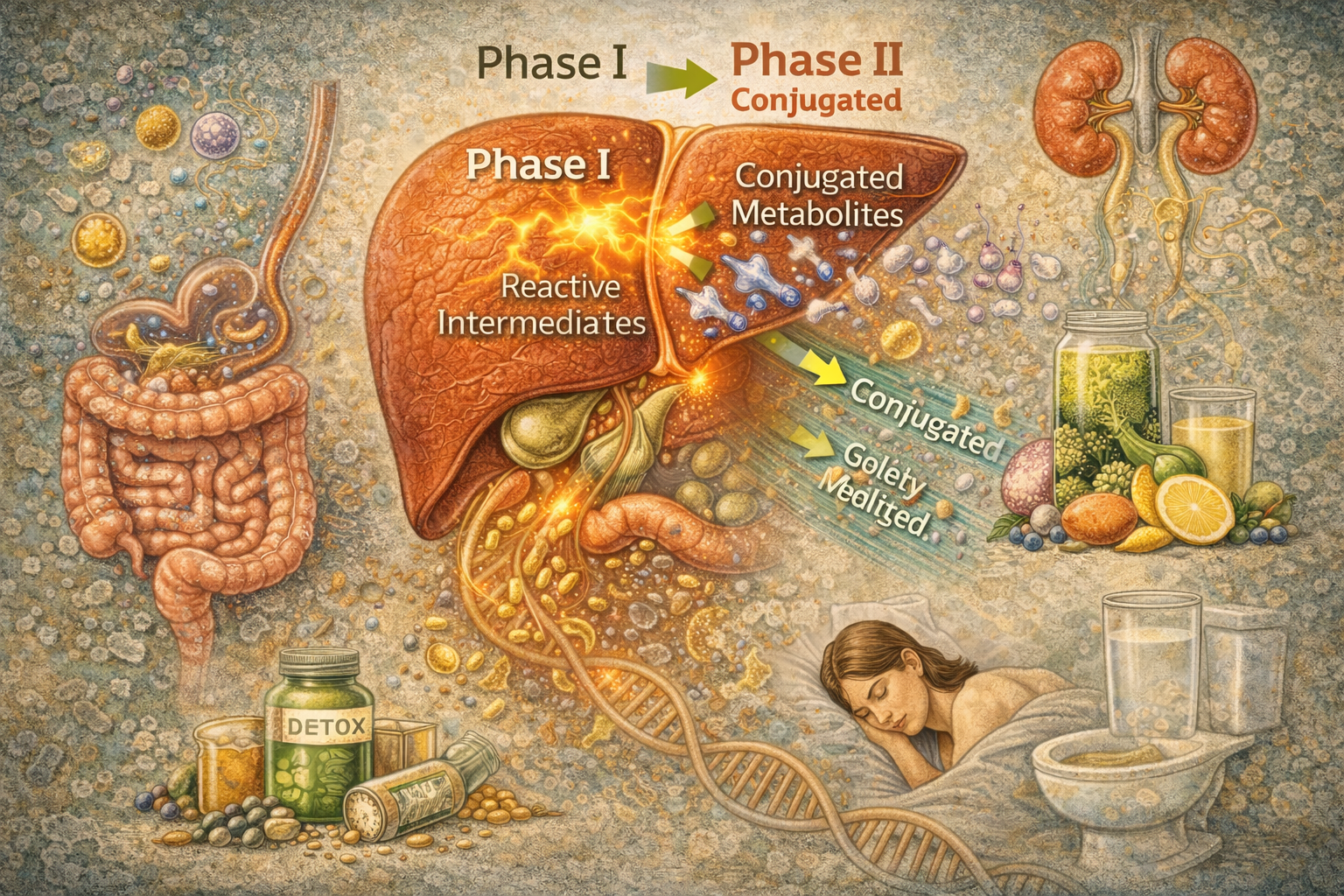
In physiology and pharmacology, detoxification is often described in phases. Phase I changes a compound, often by oxidation or similar reactions. Phase II attaches a helper molecule to make the compound easier to eliminate. Some frameworks also describe Phase III transport and excretion steps.
This sequencing matters because Phase I does not always make things safer right away. Phase I can produce active metabolites and sometimes more reactive intermediates. That is one reason Phase I and Phase II are best understood together rather than as separate hacks.
If you want a solid reference point that explains these phases in plain clinical language, this is a strong non-commercial source. NIH overview of drug metabolism phases (NCBI)
Phase I is the modification step, not the finish line
Phase I reactions are often described as modification reactions. In practice, the most famous Phase I system is cytochrome P450, a major enzyme family involved in metabolizing many xenobiotics such as drugs and toxic compounds.
A simple way to picture Phase I is this. Many substances that enter the body are fat-loving, meaning they dissolve into membranes easily and do not leave in urine easily. Phase I adds or exposes functional groups that make a compound more reactive and more ready for the next step.
A fresh real-world example
Think of a candle made of wax. If you want it to dissolve in water, you first need to change its surface. Phase I is the step that roughens the surface and makes it possible to attach something else. Phase II is the step that attaches a handle so the body can carry it out.
Phase II is where the body makes elimination easier
Phase II is often described as conjugation. In conjugation, the body couples the compound with another molecule so it becomes more water-soluble and easier to excrete. Common Phase II processes include glucuronidation, sulfation, glutathione conjugation, methylation, acetylation, and amino acid conjugation, such as glycine.
Phase II is not only in the liver. These processes can occur in other tissues as well, including intestines and kidneys, which is one reason digestion and detox are intertwined.
A fresh real-world example
If Phase I turns a compound into something sticky and reactive, Phase II is the body wrapping it in bubble wrap and labeling it for shipping. Without that wrap, the compound may irritate tissues or linger longer.
The digestive system is part of detox, not just a bystander
Many people treat detox as a liver-only story. The digestive angle is critical for two reasons.
First, the liver produces bile, and bile is not only for fat digestion. Bile also helps excrete compounds not excreted well by the kidneys, including bilirubin and drug metabolites.
Second, bile moves into the small intestine. That means the digestive tract is literally one of the exit routes for what the liver processes.
The liver produces a substantial amount of bile daily. One NCBI public health explainer describes the liver producing roughly 800 to 1,000 milliliters of bile per day and notes that bile is important for fat breakdown and absorption in the small intestine.
If you like digestion-focused content that connects food patterns to how the body handles stress and metabolism, this is a general starting point, Dr. Berg blogs.
What it really means to support liver detoxification pathways
Supporting liver detoxification pathways does not mean forcing the liver to work faster at all costs. It means reducing overload, maintaining nutrition needed for normal enzyme systems, and protecting the digestive exit routes.
Here are the most evidence-consistent levers, explained without hype.
Reduce avoidable exposures that strain the system
The liver has to process medications, alcohol, and environmental compounds. Phase I and Phase II systems exist to eliminate xenobiotics, but some xenobiotics can be activated into more reactive metabolites during these processes.
A fresh example
A person does a detox tea week while still drinking alcohol on weekends, sleeping four hours a night, and taking multiple supplements. That pattern is not supported. It is added traffic.
Treat supplements with skepticism, especially detox-branded ones
A key trend in the detox industry is selling the idea that the liver needs products to detox. But detox-branded supplements are also part of the real-world category linked to supplement-related liver injury reports in medical literature. LiverTox, an NIH resource, discusses cases of liver injury linked to certain supplements and includes reports involving detox tea products.
The practical takeaway is straightforward. If a product is marketed as a detox shortcut, it deserves extra scrutiny, not extra trust.
Support the digestive exit routes, especially bile flow and regular elimination
Because bile is both a digestive fluid and an excretion route, digestive patterns matter. Bile salts help the body excrete cholesterol and potentially toxic compounds such as bilirubin and drug metabolites.
A fresh example
A person eats very low fiber for months, feels constipated, and then tries a liver cleanse. A more rational first step is restoring the basic digestive rhythm. Regular meals, adequate hydration, and fiber that is tolerated can support regular elimination patterns, which is part of how the body clears what bile delivers into the gut.
Avoid the Phase I speed-up trap
Some detox advice pushes aggressive stimulation, as if faster is always better. But Phase I can produce reactive intermediates, and Phase II is the step that often renders compounds more water-soluble and ready for excretion.
A fresh example
Someone drinks concentrated herbal extracts to boost liver enzymes, then feels headaches and nausea, and calls it a detox reaction. It could be many things, including intolerance or adverse effects. The concept that symptoms prove toxins leaving is not a reliable scientific marker.
Focus on the building blocks that Phase II commonly uses
This is where the detox conversation can be grounded without turning into supplement marketing.
Phase II pathways include glutathione conjugation, sulfation, glucuronidation, methylation, acetylation, and amino acid conjugation.
The body needs adequate protein and micronutrients to run many enzyme systems. That does not mean megadosing. It means not starving the system while asking it to handle modern life.
A fresh example
A person doing a chronic low-calorie diet adds a detox powder because they feel sluggish. A more plausible reason for sluggishness is inadequate intake and poor sleep. Supporting detox in that case looks like stable nutrition and recovery, not a stimulant blend.
The gut-liver axis is the real detox headline
A useful way to modernize the detox story is to think in terms of the gut-liver axis.
The liver processes compounds and sends some into bile. Bile enters the gut. The gut microbiome can modify bile acids and other compounds, and the gut barrier and immune system influence inflammation levels that affect liver workload. Even if you never use that terminology, the practical meaning is simple.
What happens in the gut changes what the liver has to deal with, and what the liver sends out changes the gut environment.
That is why digestive basics are not boring in this topic. They are central.
A short list of realistic, non-dramatic strategies
This is not a cleanse plan. It is a set of steady habits that align with how liver detoxification pathways actually work.
- Be cautious with detox-marketed supplements and teas, especially multi-ingredient blends.
- Treat alcohol as a liver workload multiplier rather than a separate category.
- Keep digestion predictable with regular meals and enough fiber to maintain normal stool patterns, adjusted for tolerance.
- Avoid extreme fasting or extreme dieting patterns that reduce nutrient intake while increasing stress load.
- Use medications responsibly and avoid stacking unnecessary products, since liver metabolism pathways can be induced or inhibited, and that can change drug levels.
Closing perspective
The best detox story is not a product story. It is a physiology story.
Phase I modifies compounds, often through cytochrome P450 systems. Phase II conjugates compounds through pathways like glucuronidation, sulfation, and glutathione conjugation to support elimination.
The digestive system is part of the exit plan because bile carries certain metabolites into the gut, and bile also supports fat digestion.
If you want to support liver detoxification pathways, the most evidence consistent approach is boring in the best way. Reduce avoidable load, protect digestion, and keep nutrition stable so the body can run the pathways it already has.