WASHINGTON, DC — In the United States, the tension between individual privacy and collective security has never been sharper. From the streets of New York to the suburbs of Arizona, ordinary Americans are making calculated choices to step out of public records, shield their addresses, and live more anonymously. They are not criminals or fugitives, but professionals, parents, and veterans who view exposure as a risk. Their decisions intersect with government priorities that emphasize the importance of traceability for national defense. The result is a fragile balance, one that reflects the deeper struggle of a society where privacy and security often come into conflict.
The Long History of Anonymity vs. Security in America
The United States was founded on principles of liberty and privacy. The Fourth Amendment protects citizens from unreasonable searches and seizures. Yet, from its earliest days, the government has maintained public records to enforce property rights, taxes, and voting.
The modern era, however, has complicated this balance. After the September 11 attacks, the federal government accelerated surveillance programs, introduced the Patriot Act, and mandated stricter forms of identification under the Real ID Act. These measures were designed to close gaps exploited by terrorists, but also reshaped everyday interactions with the state. Air travel, banking, and even visiting federal buildings increasingly require traceable identification.
At the same time, the digital revolution placed previously obscure public records online. Where once one needed to visit a courthouse, now property deeds, voter rolls, and court filings are a click away. This availability, while transparent, also exposed ordinary citizens to stalking, identity theft, and harassment.
Why Privacy Is Now a National Issue
In 2024, the Federal Trade Commission reported over 1.1 million cases of identity theft, the highest on record. Doxxing has become a household term, as citizens find their names, addresses, and workplaces published online after arguments, political debates, or social media disputes. Cybercrime rings, both domestic and international, exploit these vulnerabilities for profit.
What was once an abstract policy debate is now a lived experience for millions. Parents discover their teenagers’ personal information online. Professionals face harassment at their homes. Retirees are often targeted by scams related to property ownership records.
This climate has driven more Americans to explore anonymity, creating a class of what privacy consultants call “accidental recluses.” They did not set out to live in secrecy, but circumstances pushed them toward it.
Case Study: The Prosecutor Who Hid to Survive
A retired prosecutor in the Midwest became a target of retaliation from individuals he had once convicted. His name appeared in news archives, and through property records, his home address was easily identified. After multiple threats, he transferred his property into a trust, secured a confidential voter status, and adopted mail-forwarding services.
While these steps shielded his family, they sparked debate locally. Should public officials, even retired ones, be allowed such anonymity when accountability is a democratic value? His case underscored the central dilemma: anonymity protects the individual but may obscure the public’s right to know.
Tools of Anonymity Available to Americans
Those seeking privacy employ a range of lawful strategies. Each reflects a balance between individual rights and regulatory oversight.
- Property Ownership Structures: Land trusts and LLCs can keep names off property rolls, a boon for those at risk of stalking but also used by shell companies to launder money.
- Address Confidentiality Programs (ACPs): Operating in states like California, Washington, and New York, ACPs shield survivors of stalking and domestic violence. They allow voting and mail without exposing a home address. Critics worry about potential misuse, but advocates argue that they are lifesaving.
- Data Broker Suppression: Americans can file opt-out requests with commercial data brokers. This reduces online exposure but requires persistence, as new brokers emerge continually.
- Encrypted Communication: Tools such as Signal, ProtonMail, and virtual private addresses allow for private communications, although authorities sometimes criticize them for enabling illicit use.
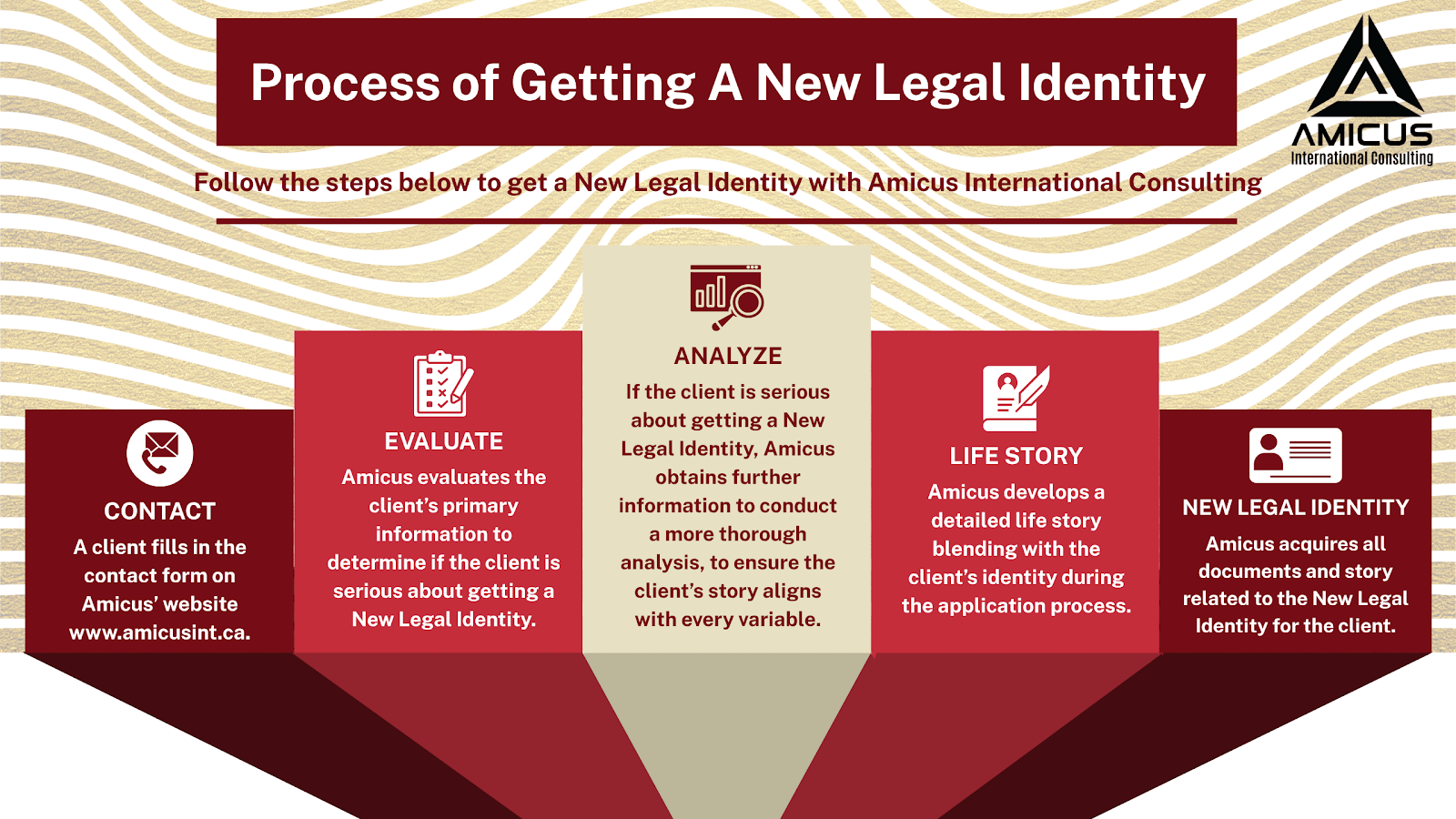
- Legal Name Changes: In extreme cases, citizens petition courts for new legal identities. This provides a fresh start, but it requires striking a balance between compliance with banking, licensing, and taxation requirements.
The National Security Perspective
National security agencies argue that anonymity poses risks. Terrorist cells, organized crime syndicates, and cybercriminal networks thrive on obfuscation. To counter these threats, the U.S. has implemented layers of surveillance and reporting requirements.
- The Real ID Act: Mandates standardized identity for air travel and federal access. Supporters say it closes loopholes. Critics argue it burdens ordinary citizens with additional exposure.
- Financial Transparency: The 2021 Corporate Transparency Act requires LLCs to report beneficial owners to the Treasury Department, reducing anonymous property ownership.
- Travel Surveillance: Biometric systems at airports now track faces and fingerprints, reducing the ability to travel anonymously.
Officials argue these measures protect the public. Privacy advocates warn that they erode the ability of law-abiding citizens to live quietly.
Case Study: The Activist Living a Double Life
In New York, a civil rights activist faced relentless doxxing after organizing public demonstrations. To protect her home, she purchased property through an LLC and listed only a virtual office address. In her daily life, she leads an anonymous existence. Yet, as an activist, she is one of the most surveilled individuals in her city, appearing in law enforcement watchlists and security camera databases.
Her story highlights the paradox of modern anonymity. Citizens may succeed in shielding their private lives, but cannot escape surveillance when engaged in public activism.
State-by-State Variations in Privacy Law
The lack of federal privacy legislation has left Americans with a patchwork system.
- California: The California Consumer Privacy Act (CCPA) enables residents to request the deletion of their data from businesses. It is one of the strongest protections in the country.
- Texas: Offers limited consumer data rights but strong property disclosure, making anonymity difficult.
- Florida: Offers confidentiality programs for certain public employees, but not comprehensive protections for all citizens.
- Washington and Oregon: Strong address confidentiality programs, widely used by at-risk individuals.
This unevenness means privacy depends heavily on where one lives.
Global Comparisons
Globally, the U.S. approach stands out for its fragmentation.
- European Union: The General Data Protection Regulation (GDPR) grants a “right to be forgotten.” Citizens can request the deletion of personal data. However, EU governments enforce strict anti-money laundering laws that require transparency in banking and property ownership.
- Canada: Offers provincial address confidentiality programs and robust privacy laws. Yet, land titles remain public.
- Asia: Countries like Japan enforce strong privacy laws on data use, but government ID systems require extensive documentation for everyday life.
The international picture reveals that all democracies face the same dilemma: how to strike a balance between privacy protection and national security.
Case Study: The Entrepreneur Who Rebuilt Identity After Theft
In California, a young entrepreneur faced repeated instances of identity theft following a massive corporate data breach. Criminals opened accounts and disrupted his business. Exhausted, he opted for a legal name change, incorporated under a new entity, and minimized his personal exposure.
His transformation enabled him to rebuild financially, but it required navigating complex compliance requirements. His story illustrates that anonymity can restore stability, but it must always be paired with robust legal frameworks that ensure accountability.
The Risks of Excessive Anonymity
Critics of growing anonymity raise several concerns.
- Real Estate Transparency: Anonymous property ownership can enable money laundering.
- Election Integrity: Confidential Voter Rolls May Complicate Election Verification.
- Criminal Abuse: Fraudsters may exploit anonymity tools to evade accountability.
Balancing these risks requires oversight. Privacy must be protected, but transparency should not be compromised.
The Identity Economy: Privacy as a Commodity
Anonymity has become an industry. Privacy firms now sell services ranging from property shielding to systematic data broker removals. Subscription-based services promise ongoing protection.
This raises equity concerns. Wealthier citizens can afford anonymity packages, while lower-income citizens remain fully exposed to the risks. Advocates call for establishing baseline privacy rights to prevent privacy from becoming a privilege reserved for the affluent.
Practical Guide: How Americans Can Live Anonymously While Staying Compliant
For those who wish to reduce exposure but remain within the law, experts recommend a layered approach.
- Audit Your Digital Footprint
Begin by searching your name across data brokers and search engines. Document which sites display your address, phone number, or relatives. - File Data Broker Opt-Out Requests
Utilize free resources, such as state registries or paid privacy services, to request removal. Be prepared to revisit this process periodically, as new brokers emerge regularly. - Secure Property Ownership
If safety is a concern, consider placing real estate into a revocable living trust or LLC. Consult an attorney to ensure compliance with the Corporate Transparency Act. - Adopt an Address Confidentiality Program (ACP)
Survivors of stalking, harassment, or domestic violence should apply for the ACP programs available in their state. These provide substitute mailing addresses for voter rolls and DMV records. - Use Virtual Addresses and Encrypted Communication
Rely on mail-forwarding services for personal correspondence. For communication, encrypted platforms such as Signal or ProtonMail offer greater security. - Request Redaction of Court Records Where Possible
File motions to seal or redact sensitive information in court filings. Rules vary by state, but may be granted in cases involving safety risks. - Consider Legal Name Change Only as a Last Resort
While powerful, a legal name change creates significant obligations for banking, tax, and licensing compliance. This step should be carefully weighed and professionally guided. - Maintain Compliance at All Stages
Anonymity must never mean illegality. Citizens are urged to consult attorneys or compliance specialists to ensure structures are transparent to regulators, even if they are private to the public.
Conclusion: A Fragile Balance That Defines Freedom
The debate over anonymity versus security strikes at the heart of American identity. Citizens demand the right to live free from constant visibility. The government insists on accountability for safety.
For now, both coexist uneasily. The accidental recluses, teachers, veterans, entrepreneurs, and activists stand as proof that privacy is still possible but increasingly contested. Their choices will influence how future Americans navigate the crossroads of liberty and safety.
The roadmap for ordinary citizens is not to vanish but to strike a balance. Living anonymously while remaining compliant is a challenging yet achievable goal. In doing so, Americans protect not only themselves but also the principle that privacy and security, though in tension, can coexist within a democracy.
Contact Information
Amicus International Consulting
Phone: +1 (604) 200-5402
Signal: 604-353-4942
Telegram: 604-353-4942
Email: info@amicusint.ca
Website: www.amicusint.ca