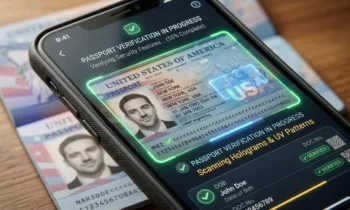
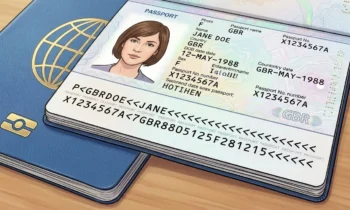
WASHINGTON, D.C. – Identity systems are undergoing a transformation. For more than a century, passports, birth certificates, and driver’s licenses defined legitimacy. Today, governments worldwide are turning to biometrics, including fingerprints, facial recognition, iris scans, and even voice patterns, as the next frontier in identification. Proponents argue that biometrics ensure security, prevent fraud, and streamline travel. Critics counter that they entrench surveillance, erode privacy, and create systems where citizens cannot opt out.
Amicus International Consulting has studied the global rise of biometric systems, analyzing how governments adopt them, how corporations integrate them into daily transactions, and how citizens respond. This release examines the mechanics of biometric expansion, the motivations driving it, the risks it poses to individuals, and the strategies Americans employ to navigate a world where identity is increasingly reduced to biological signatures.
The Expansion of Biometric Systems
Biometric adoption accelerated in the aftermath of global security crises. Following terrorist attacks and migration surges, governments invested heavily in tools that could verify identities more reliably than paper documents.
- Air Travel – U.S. Customs and Border Protection (CBP) has implemented facial recognition technology at airports nationwide. International travelers are scanned upon arrival and departure.
- National ID Programs – India’s Aadhaar program, with over 1.3 billion enrollees, collects fingerprints and iris scans, linking them to banking, welfare, and mobile services.
- Border Agreements – The European Union’s Entry/Exit System uses biometrics to track non-EU nationals across Schengen borders.
- Financial Services – Banks increasingly adopt fingerprint or facial recognition logins for accounts and mobile apps.
- Corporate Integration – Employers in sensitive sectors use iris scans or voice biometrics to secure facilities and systems.
These systems are justified as security measures, but they represent a profound shift: identity becomes inseparable from biology.
Motivations for Biometric Expansion
Governments and corporations push biometrics for several reasons:
- Fraud Prevention – Biometric verification reduces reliance on easily forged documents.
- Efficiency – Automated systems speed border crossings and streamline services.
- Security – Biometric identifiers are difficult to replicate, making impersonation harder.
- Data Integration – Centralized biometric databases allow governments to link multiple services.
- Cost Savings – Automated checks reduce staffing needs at borders and offices.
- Political Messaging – Leaders use biometric expansion to project modernity and control migration.
The motivations are practical, but for citizens, the implications are deeply personal.
Risks and Concerns
Critics warn of several risks tied to biometric systems:
- Surveillance Expansion – Biometric data enables tracking across borders, cities, and even private spaces.
- Data Breaches – Unlike passwords, biometric identifiers cannot be changed if stolen.
- False Matches – Errors in facial recognition disproportionately affect minorities, raising concerns about discrimination.
- Function Creep – Systems built for border control expand into policing, welfare monitoring, or protest surveillance.
- Loss of Autonomy – Citizens may be required to surrender biometrics to access basic services.
- Commercial Exploitation – Private firms may monetize biometric data through advertising or analytics.
These risks raise fundamental questions about the balance between security and freedom.
Case Studies: Biometric Systems in Action
Case Study One: U.S. Airport Rollout
At major airports, including JFK and Atlanta, travelers now pass through facial recognition scanners before boarding their flights. While advertised as convenience tools, the systems collect biometric data, which is stored in DHS databases. Some travelers report difficulty opting out, despite CBP’s insistence that participation is voluntary.
Case Study Two: India’s Aadhaar
India’s Aadhaar program, initially voluntary, became mandatory for services ranging from banking to school enrollment. Privacy advocates challenged the system in court, arguing it created mass surveillance. The Supreme Court of India upheld certain provisions while limiting specific uses; however, concerns persist that Aadhaar has shifted from identity verification to social control.
Case Study Three: European Border Expansion
The EU’s Entry/Exit System requires fingerprints and facial images for all non-EU nationals. Critics argue that it effectively criminalizes ordinary travelers by placing them in databases designed for law enforcement purposes. Supporters counter that it reduces overstays and strengthens Schengen security.
Case Study Four: Chinese Surveillance
China’s extensive biometric infrastructure ties facial recognition to public cameras, policing, and social credit systems. Citizens are monitored in real-time, with their identities linked to behaviors such as jaywalking or political dissent. Western observers cite this as a cautionary tale of biometric overreach.
Case Study Five: African Adoption
Several African nations, supported by international aid, rolled out biometric voter registration. While reducing fraud, the systems sparked controversy over disenfranchisement when technical failures excluded legitimate voters.
Case Study Six: The Latin American Pilot
In Brazil, biometric voting systems were tested during regional elections. While hailed as innovative, glitches and mismatches caused delays, raising doubts about whether technology improved integrity or created new vulnerabilities.
Case Study Seven: Middle Eastern Border Trials
In the Gulf States, biometric kiosks verify workers’ identities before entry. Labor rights groups warn that these systems facilitate worker tracking without providing transparency or an appeal process.
These examples highlight both the promise and peril of biometric systems.
Regional Trends in Biometric Expansion
Biometric rollouts reflect regional priorities and challenges:
- North America – The U.S. focuses on border control and aviation security, while Canada pilots facial recognition in immigration, but with more robust debates over privacy.
- Europe – Integration through Schengen drives centralized systems, but the EU’s stronger privacy laws create pushback and litigation.
- Asia – India and China lead mass biometric enrollment, though with divergent goals: India for welfare delivery, China for control.
- Africa – Donor-funded biometric voter registration projects reshape democracy but risk excluding citizens without reliable scans.
- Latin America – Pilot projects in voting and welfare delivery emphasize modernization but struggle with infrastructure gaps.
- Middle East – Gulf nations deploy biometrics on a large scale to manage foreign labor, raising concerns about surveillance without accountability.
These trends indicate that while biometrics are a global phenomenon, their applications are influenced by local politics.

Humanitarian Impacts of Biometric Systems
In refugee and humanitarian contexts, biometrics are increasingly used to distribute aid and verify the identities of displaced populations. The UNHCR has deployed iris scans to manage refugee camps in Jordan and Kenya. While intended to prevent fraud, these systems raise concerns:
- Refugees may be forced to surrender biometrics without informed consent.
- Technical errors can result in the denial of food or healthcare.
- Data sharing between aid agencies and governments may expose vulnerable populations to risk.
The humanitarian use of biometrics illustrates how identity systems impact not only citizens but also the world’s most vulnerable populations.
How Citizens Respond
Citizens respond to biometric expansion in diverse ways:
- Legal Challenges – Advocacy groups file lawsuits challenging mandatory biometric collection, citing constitutional and human rights grounds.
- Opt-Out Strategies – Where possible, individuals decline participation, though options are shrinking as systems expand.
- Travel Adjustments – Privacy-minded travelers choose airports or carriers with less intrusive systems.
- Technological Resistance – Some individuals attempt to defeat facial recognition by wearing masks, makeup, or anti-surveillance clothing, although legal consequences may follow.
- Alternative Structuring – High-net-worth individuals pursue second citizenship or residency to diversify mobility options.
- Civic Activism – Protests and campaigns against biometric rollouts have slowed or reshaped projects in the U.K., Kenya, and parts of the U.S.
For many, resistance is less about rejecting technology and more about reclaiming choice.
Investigative Techniques and Biometrics
Biometric systems are not just tools of surveillance but of investigation. Law enforcement agencies use facial recognition to identify suspects from security footage. Immigration authorities match fingerprints against global databases. Financial institutions verify identity through voiceprints during customer service calls.
While effective in solving crimes, these techniques raise concerns when errors or misuse target innocent individuals. Investigators themselves acknowledge the need for oversight.
Expanded Legal Case Studies
Case Study: The Wrongful Arrest
In 2020, a Detroit man was wrongfully arrested after a faulty facial recognition match linked him to a theft. Lawsuits followed, sparking debate over reliability and racial bias in biometric systems.
Case Study: The Protester Database
Civil liberties groups revealed that biometric systems were used to track protesters in a major U.S. city. Lawsuits challenged the practice, arguing that it chilled free expression.
Case Study: The Border Dispute
A European traveler challenged biometric storage under EU law, arguing that indefinite retention of biometric data violated their privacy rights. Courts ordered time limits, but the precedent highlighted growing legal battles.
Case Study: The Asylum Applicant
In Australia, biometric errors matched an asylum applicant’s fingerprints with those of another individual, delaying their case for months. Legal advocacy groups intervened to correct the record, exposing vulnerabilities in automated systems.
Case Study: The Corporate Breach
A U.S. financial institution experienced a breach of its voice biometric database. Unlike stolen passwords, compromised voiceprints cannot be changed. Customers faced ongoing risk, highlighting the permanence of biometric identifiers.
These cases illustrate that biometric frontiers are also legal battlegrounds.
The Intersection of Biometrics and Document Fraud
Biometric systems emerged partly to counter the use of forged documents. Passports with embedded chips now contain fingerprints or facial templates, making forgery more difficult. However, fraudsters adapt. Stolen biometric data has been used to spoof systems, and insiders have manipulated databases to insert false entries.
This cat-and-mouse game links the rise of biometrics directly to the persistence of forgery. As long as systems exist, adversaries will seek ways to circumvent them.
Emerging Technologies and Future Scenarios
Looking forward, biometrics are expanding into new domains:
- Behavioral Biometrics – Systems analyze typing rhythms, walking patterns, and even mouse movements to authenticate identity.
- DNA Databases – Governments consider linking DNA to identity systems, raising profound concerns about privacy.
- Voice Recognition – Banks and call centers are increasingly verifying customers by voiceprints, storing biometric data across various industries.
- Wearables and IoT – Smart devices collect heart rates, sleep cycles, and geolocation, effectively extending biometric monitoring into daily life.
- AI-Driven Prediction – Some governments experiment with predictive policing based on biometric and behavioral data.
These scenarios blur lines between verification and surveillance, raising urgent questions about governance.
Broader Implications
Biometric expansion forces societies to confront fundamental questions:
- Should governments hold permanent biometric databases of all citizens?
- How can errors and misuse be prevented?
- What rights do individuals have to opt out of systems that define access to travel, finance, and services?
- Will biometric control become a global standard that erases anonymity altogether?
For some, biometrics represent security. For others, they symbolize a future of constant surveillance.
Amicus International Consulting’s Perspective
Amicus International Consulting advises that biometrics are here to stay, but individuals can manage exposure. The firm recommends:
- Understand Systems – Know where and when biometrics are collected.
- Diversify Mobility – Secure second citizenships or residencies to reduce dependency on one country’s biometric regime.
- Limit Voluntary Exposure – Decline optional biometric programs where possible.
- Adopt Secure Travel Hygiene – Manage itineraries and devices to minimize data collection.
- Engage Legal Protections – Use courts and advocacy to push back against overreach.
- Plan for the Long Term – Assume biometrics will expand, and build strategies that preserve autonomy even within mandatory systems.
The firm emphasizes that biometrics are potent tools, but they must be balanced with autonomy. Sustainable privacy requires structuring, foresight, and adaptability.
Conclusion
Biometric frontiers define the future of identity. Governments embrace them as solutions to fraud and inefficiency. Citizens grapple with the implications for privacy, freedom, and dignity. For every efficiency gained, a layer of autonomy is lost.
The debate is not about whether biometrics will expand, but how societies will shape their use. In that shaping lies the future of liberty.
For Amicus clients, the lesson is clear: biometrics cannot be ignored, but they can be navigated. Through lawful structuring, second citizenship strategies, and deliberate exposure management, it is possible to remain resilient in a world where identity is increasingly defined by biology.
Contact Information
Phone: +1 (604) 200-5402
Signal: 604-353-4942
Telegram: 604-353-4942
Email: info@amicusint.ca
Website: www.amicusint.ca