The market for oud has expanded rapidly over the past decade, and with that expansion has come considerable variation in quality, format, and approach. Whether you’re searching for an oud cologne for daily wear, a traditional oil-based perfume for special occasions, or simply want to understand what the best oud fragrances actually offer, this guide gives you the framework to navigate the market intelligently.
Oud Cologne: What It Is and How It Differs
The term oud cologne is used in several different ways, and understanding the distinction matters when making a purchasing decision.
In its most literal sense, cologne refers to a fragrance concentration, specifically eau de cologne, which contains a relatively low percentage of fragrant compounds, typically 2 to 4 percent, suspended in alcohol. True oud cologne in this sense would be a light, alcohol-based fragrance with oud as a featured note, designed for fresh, relatively short-lived wear.
In practice, however, oud cologne is often used more loosely to describe any oud-forward fragrance intended for regular masculine or unisex wear. Many products marketed as oud cologne are actually eau de parfums, concentrates, or oil-based perfumes with considerably higher concentrations of fragrant compounds and much longer-lasting power.
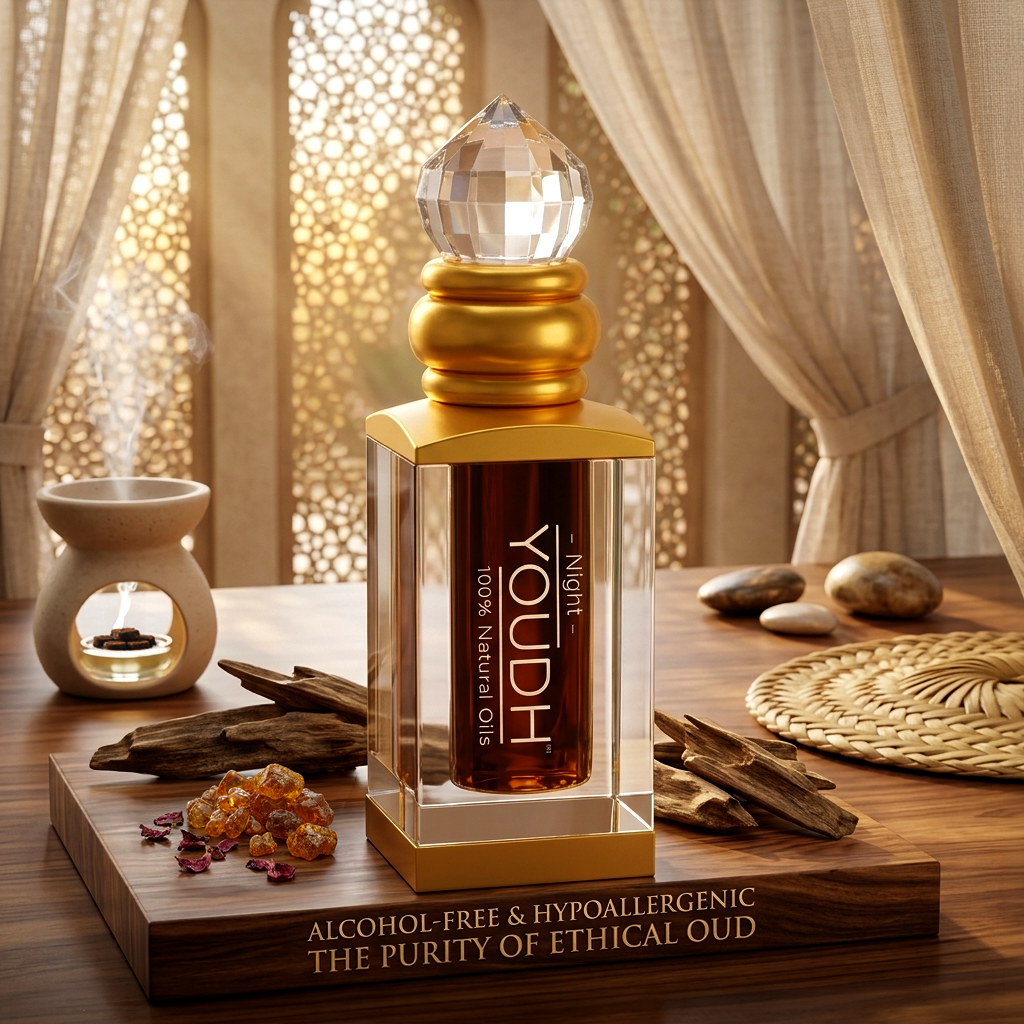
The most important distinction for anyone seeking genuine oud is not the concentration label but the format. Oil-based oud, applied directly to the skin, delivers the full character of the ingredient in a way that alcohol-based sprays simply cannot. The oil sits on the skin, warms with body temperature, and releases its aromatic compounds slowly over many hours. The experience is intimate, personal, and lasting.
What Makes a Genuine Oud Fragrance
Before evaluating specific options, it’s worth understanding what separates a genuine oud fragrance from the many products that use the word oud while containing little or none of the actual ingredient.
Genuine oud comes from agarwood, the resin-saturated heartwood of Aquilaria trees found across Southeast Asia and South Asia. According to Kew Royal Botanic Gardens, agarwood forms only when the tree becomes infected by a specific pathogen and responds by producing aromatic resin as a defence. This process takes years or decades and cannot be reliably engineered, which is why high-quality oud oil is among the most expensive natural substances on earth.
Synthetic oud molecules can approximate aspects of the scent profile at a fraction of the cost, and many mass-market fragrances labelled as oud rely primarily on these approximations. The difference in experience is significant. Natural oud evolves on skin, interacts with individual body chemistry, and produces a depth and complexity that synthetic alternatives cannot replicate.
The signals of a genuine oud fragrance include transparency about ingredients and sourcing, an oil-based formulation free from alcohol and synthetic additives, realistic pricing that reflects the actual cost of agarwood production, and a scent profile that evolves and develops over hours rather than projecting briefly and fading.
Categories of Oud Fragrance Worth Exploring
The best oud fragrances for any individual depend heavily on personal preference, occasion, and familiarity with the ingredient. Thinking in categories helps narrow the field.
Pure oud oils are the most traditional and most uncompromising format. A single-origin oud oil from a specific region, distilled without additives, gives the clearest picture of what the ingredient actually is. These are typically the most expensive options and the most rewarding for those who want to understand oud in its most authentic form. They are also the most variable, since single-origin oils reflect the specific character of the wood and the distiller’s craft.
Oud blends combine oud with complementary ingredients to create more approachable or more complex compositions. Rose and oud is one of the most classic combinations, with the floral sweetness of rose softening the intensity of the wood. Oud and amber creates a warmer, more golden character. Oud with sandalwood produces a smoother, creamier profile. These blends are often the best entry points for those new to oud, offering the core character of the ingredient in a context that is more immediately familiar.
Light vs. intense profiles is another useful distinction. Vietnamese and Cambodian ouds tend toward lighter, cleaner, sweeter profiles. Indian oud is significantly more intense, smoky, and animalic. If you’re new to oud, starting with a lighter regional profile or a well-constructed blend gives you the experience of the ingredient without the most challenging aspects of its most traditional expressions.
How to Wear Oud Cologne and Oud Oil
Wearing oud well is less about rules and more about understanding how the ingredient behaves:
- Apply to pulse points where body heat is strongest: wrists, inner elbows, the base of the throat, behind the ears
- For oil-based oud, one small drop per pulse point is typically sufficient. Oud is concentrated and a little goes a long way
- Allow time for it to develop. The first impression is rarely the full picture. Give it twenty to thirty minutes before assessing how a particular oil works for you
- Consider the occasion. Pure oud oils are most rewarding when you have time to notice them develop. For busier days, a lighter blend may be more practical
- Store oil-based oud away from direct sunlight and heat, which can degrade the aromatic compounds over time
The Investment Perspective
For readers who approach purchasing decisions analytically, oud rewards consideration as an investment in quality rather than a volume purchase.
A high-quality oud oil, used sparingly as it is designed to be, lasts considerably longer than an equivalent spend on a mainstream spray perfume used daily. A small bottle of genuine oud oil, applied as a single drop to each pulse point, can easily provide three to six months of daily wear. The cost per wearing, calculated properly, is often more competitive than it appears at first glance.
The longevity of the scent on skin reinforces this value calculation. Where a mainstream eau de parfum may require reapplication through the day, a quality oil-based oud typically lasts a full eight to ten hours from a single morning application. No reapplication, no midday touchup, no carrying a bottle in your bag.
The emotional and personal value is harder to quantify but no less real. Fragrance that reflects genuine character, provenance, and craft is a different category of purchase from a commodity product. The best oud fragrances are things people wear for years, return to repeatedly, and recommend with genuine enthusiasm.
Final Thoughts
The oud market in 2026 offers more options than ever before, which makes intelligent navigation more important than ever. The distinction between genuine and synthetic, between oil-based and alcohol-based, and between authentic sourcing and marketing language determines whether you’re getting the real experience or an approximation of it.
Start with a reputable producer like Youdh who is transparent about their ingredients and sourcing. Try on skin rather than paper. Give it time. And approach the experience with the patience that a genuinely complex, genuinely ancient ingredient deserves.