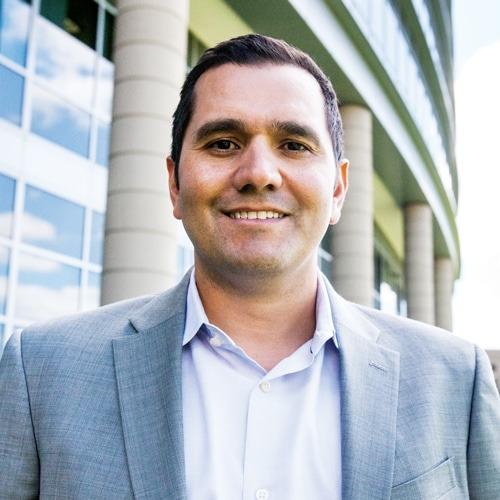
Sustainability in industrial operations is not a branding exercise. In chemical management and distribution — where the materials handled carry environmental risk, where regulatory exposure is real, and where clients increasingly evaluate suppliers against environmental and social governance criteria — sustainability is an operational discipline. It requires the same rigor as any other process-driven function: defined objectives, measurable outcomes, documented performance, and accountable leadership. Mauricio Pincheira, who leads Automotive and Industrial operations at The Chemico Group across the U.S., Canada, and Mexico, has led large-scale sustainability initiatives throughout a career spanning more than 25 years in the automotive, industrial, and energy sectors. That experience is not peripheral to his operational profile. It is integral to it.
Why Sustainability Matters Differently in Chemical Management
The sustainability calculus looks different in chemical management than it does in most industrial sectors. The materials at the center of the business — lubricants, specialty chemicals, cleaners, coatings — require careful handling at every stage of the supply chain. Improper storage, transport, or disposal creates environmental exposure that is both regulatory and reputational. The cost of a compliance failure in this environment extends well beyond the immediate incident into client relationships, procurement standing, and enterprise reputation.
For this reason, sustainability leadership in chemical management is not primarily a function of corporate communications. It is a function of operational discipline — the same discipline that governs process performance, quality outcomes, and compliance documentation. An executive who has led sustainability initiatives in this environment understands that environmental performance and operational performance are not separate tracks. They are the same track, measured by different metrics.
Mauricio Pincheira’s experience leading large-scale sustainability initiatives across demanding industrial environments reflects exactly that integrated understanding. The initiatives he has led were not positioned alongside the operational work. They were embedded in it — designed and executed with the same process rigor that governs every other dimension of his operational mandate.
Sustainability as a Client Relationship Asset
The clients The Chemico Group serves — automotive manufacturers, industrial operators, and other large-scale producers — are themselves operating under increasing environmental and social governance scrutiny. Their procurement decisions reflect that scrutiny. When evaluating chemical management and distribution partners, these clients look not only at price and service reliability but at the environmental performance profile of the suppliers who enter their facilities, handle their materials, and represent a dimension of their own supply chain governance story.
A chemical management partner that can demonstrate documented, auditable sustainability performance is a different proposition than one that cannot. It reduces the client’s supply chain governance exposure. It supports the client’s own environmental reporting. And it signals an organizational culture that treats compliance as a standard rather than a ceiling.
The sustainability record that Mauricio Pincheira has built across his industrial career positions The Chemico Group’s Automotive and Industrial division as a partner that adds governance value, not just operational value, to the client relationships it maintains. In procurement environments where supplier sustainability performance is increasingly scrutinized, that positioning is not a secondary benefit. It is a competitive differentiator.
The Methodological Overlap Between Six Sigma and Sustainability
Six Sigma and environmental management share a foundational logic: both are concerned with reducing the variation and waste that produce negative outcomes. In process manufacturing and distribution, waste is not only a quality problem — it is an environmental one. Materials that are overused, improperly handled, or not recovered at end of use represent both a process inefficiency and an environmental liability.
The Six Sigma framework — define, measure, analyze, improve, control — applies as directly to environmental performance as it does to product quality or service reliability. An executive who has internalized that methodology at the Master Black Belt level carries a set of analytical tools that are directly applicable to sustainability program design: identifying where environmental impact is generated, measuring current performance against defined standards, analyzing root causes of deviation, implementing structured improvements, and building control mechanisms that sustain performance gains over time.
This methodological overlap is not coincidental. It reflects a broader truth about operational excellence in industrial environments: the same discipline that produces quality produces compliance, and the same discipline that produces compliance produces sustainability. They are expressions of a single operating philosophy applied across different performance dimensions.
The connection between Mauricio Pincheira’s Six Sigma methodology and his sustainability leadership is not a matter of credential alignment. It is a matter of applied operational logic — the same logic, directed at different categories of organizational performance, producing outcomes that are measurable, documented, and sustained.
Sustainability Leadership Across Three National Markets
Environmental regulation is not uniform across the U.S., Canada, and Mexico. Each national market has its own framework for chemical handling, waste management, environmental reporting, and compliance documentation. An enterprise operating across all three must maintain a sustainability posture that satisfies the most stringent applicable standard in each market while managing the administrative complexity of operating across three distinct regulatory regimes.
Leading sustainability initiatives at this geographic scale requires the same organizational capabilities that cross-border operational leadership demands more broadly: enterprise-level consistency in standards, local adaptability in implementation, and governance structures that prevent compliance gaps from developing undetected across distributed operations.
Pincheira’s mandate encompasses all three markets. His experience leading sustainability initiatives across complex, multi-jurisdiction industrial environments means that the sustainability dimension of The Chemico Group’s North American operations is not managed as a local responsibility in each market. It is managed as an enterprise responsibility — with consistent standards, distributed accountability, and the kind of documented performance record that clients and regulators in all three markets can verify.
Environmental Performance as Organizational Character
The most durable sustainability programs are not those that respond to regulatory pressure or client demand. They are those that reflect an organizational character — a set of values about how operations should be conducted that would produce the same environmental performance even in the absence of external requirements.
Building that character requires leadership that treats environmental performance as a dimension of operational integrity, not as a compliance function to be satisfied at minimum cost. It requires executives who have led sustainability initiatives not because they were required to, but because they understood that how an enterprise manages its environmental impact is a reflection of how it manages everything else.
Mauricio Pincheira’s career record — more than 25 years across the automotive, industrial, and energy sectors, including sustained leadership of large-scale sustainability initiatives — reflects that kind of organizational character. The Chemico Group’s environmental performance across its North American operations is an expression of the same operational discipline that defines its service delivery, its compliance record, and its standing as one of the continent’s largest minority-owned enterprises in industrial chemical management.
About Mauricio Pincheira
Mauricio Pincheira is a senior executive with more than 25 years of experience in the automotive, industrial, and energy sectors. He leads Automotive and Industrial operations at The Chemico Group, one of North America’s largest minority-owned chemical management and distribution enterprises, with operational responsibility across the U.S., Canada, and Mexico. A certified Six Sigma Master Black Belt and Project Management Professional, he has led mergers, operational transformations, and large-scale sustainability initiatives throughout his career. He is a recipient of the HACR Young Hispanic Corporate Achievers Award. Learn more about Mauricio Pincheira’s sustainability leadership and industrial operations expertise through his professional profile.