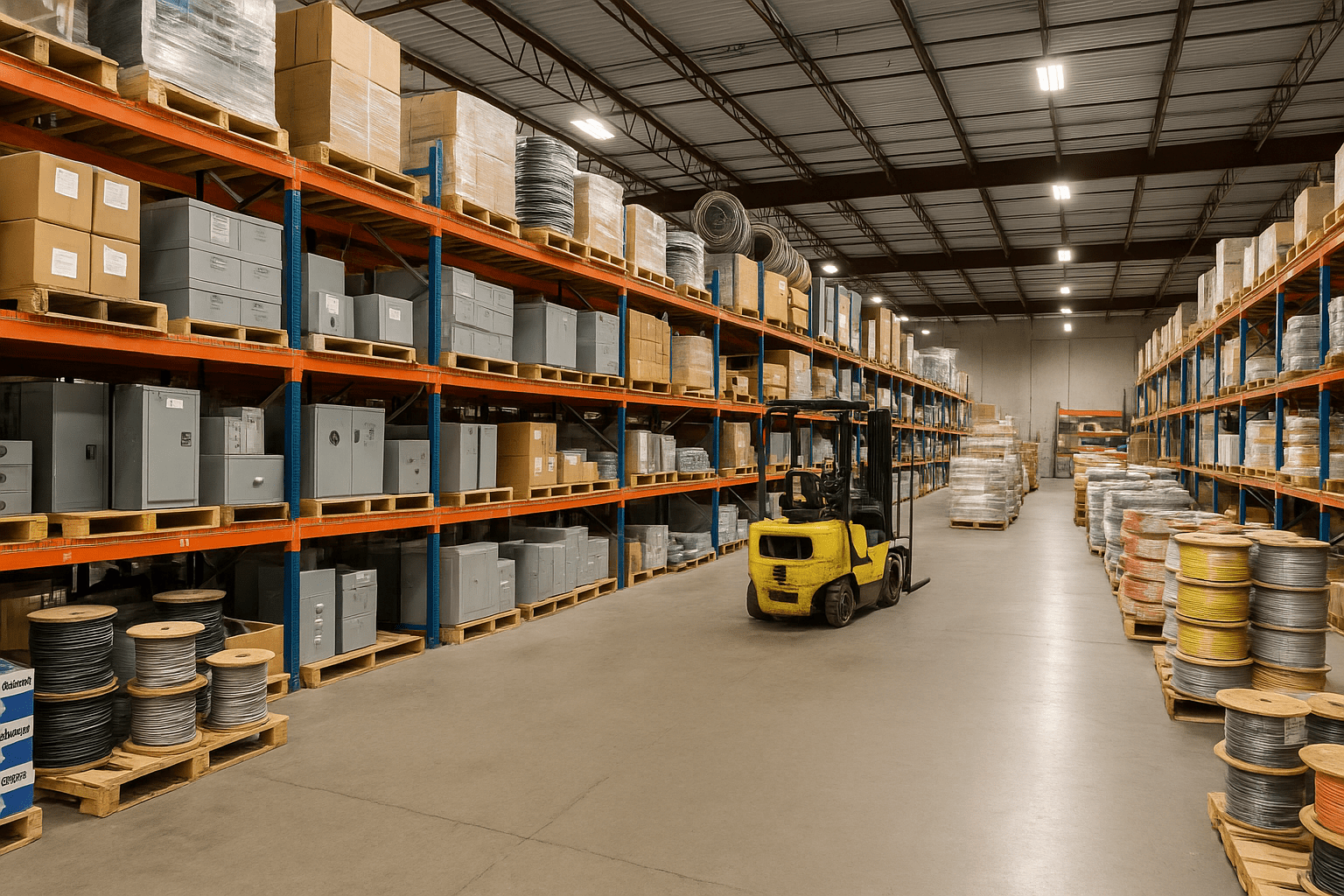
The electrical construction and infrastructure industry is changing rapidly, and electrical distribution companies are being forced to evolve just as quickly. New technologies, shorter timelines, tighter margins, and increased expectations from contractors and project owners alike are rewriting the rules of the game. In this environment, traditional models of material distribution, stocking, shipping, and selling are no longer enough.
To stay competitive and deliver value, electrical distribution companies are adapting their operations, investing in technology, and reimagining their relationships with customers. They’re becoming supply chain partners, technical advisors, and efficiency enablers, all while keeping pace with the speed and complexity of today’s construction demands.
Meeting the Demand for Speed and Precision
In the past, ordering electrical supplies might have involved a phone call, a fax, and a few days of lead time. Today, contractors expect real-time inventory visibility, same-day delivery, and just-in-time material staging—often across multiple job sites. Delays of even a few hours can cost thousands in labor downtime.
Electrical distribution companies have responded by improving logistics networks, expanding delivery fleets, and offering jobsite-specific services. Materials can be pre-kitted for installation phases, labeled by zone or floor, and delivered according to exact project schedules. Some distributors even offer mobile apps for field foremen to place orders on the fly, track shipments, and receive alerts when deliveries are nearby.
In short, the best distributors have stopped acting like warehouses and started operating like logistics powerhouses—because in today’s world, getting the product there on time is half the battle.
Embracing Technology and Automation
Another key area of adaptation is digital infrastructure. As the construction industry embraces automation, data tracking, and procurement software, electrical distributors have followed suit.
Many now offer full e-commerce platforms where contractors can view real-time stock levels, download submittals, compare specs, and place orders 24/7. Integration with contractor ERP systems enables faster purchasing, budget tracking, and inventory forecasting. Some distributors also provide online dashboards for large projects, allowing customers to monitor deliveries, returns, invoices, and total material spend across multiple jobs in one place.
Behind the scenes, distributors are investing in their own automation—warehouse management systems, demand forecasting algorithms, and AI-assisted procurement tools—to keep inventory lean while staying responsive. These tools help ensure that high-demand items are always in stock, while minimizing overstock risk and reducing waste.
Responding to Complex, Multi-Site Projects
As the market shifts toward national rollouts, remote projects, and complex multi-phase builds, electrical distributors are evolving their support models to match.
Instead of treating each project as a standalone order, top-tier distributors now offer project management services. This means assigning dedicated teams to coordinate logistics, monitor lead times, and track performance metrics across locations. For contractors juggling dozens of job sites, this centralized approach simplifies operations and ensures consistency in product quality, delivery timing, and documentation.
Some distributors also offer national account programs that standardize pricing and materials across all regions—an essential advantage for companies working on chain store expansions, data center builds, or nationwide energy upgrades.
Offering More Than Just Products
Today’s electrical systems are more integrated and sophisticated than ever. With the rise of smart buildings, energy-efficient designs, renewable integration, and advanced control systems, product selection has become far more nuanced.
Electrical distribution companies have responded by building out their technical support capabilities. Many now employ application engineers, certified lighting specialists, and gear experts who can assist with layout planning, product substitutions, and NEC compliance. They also provide jobsite consultations, training sessions, and troubleshooting support—particularly useful when contractors encounter unfamiliar technologies or complex installation requirements.
By offering expertise alongside inventory, distributors help ensure that the right products are selected the first time, reducing costly rework and project delays.
Building Stronger Relationships With Contractors
The role of the distributor is no longer transactional—it’s relational. Contractors want partners who understand the pressures of fast-paced projects, who communicate clearly, and who can anticipate problems before they happen.
Electrical distribution companies that succeed today are investing in customer service just as much as inventory or logistics. This includes assigning dedicated account reps, setting up collaborative planning meetings, and offering post-sale support like warranty tracking or product returns.
The relationship doesn’t end when the truck leaves the dock. In fact, that’s when the best partnerships really begin.
Supporting Sustainability and Energy Efficiency
As energy codes tighten and demand for environmentally responsible construction grows, distributors are also stepping up to support sustainability goals. Many now stock energy-efficient lighting, low-voltage systems, and renewable-ready equipment by default. They assist contractors in navigating rebate programs, selecting compliant products, and documenting materials for LEED or ESG reporting.
Some distributors go even further by offering recycling programs for old ballasts, wire, and packaging—or working with manufacturers that prioritize sustainable production and supply chain practices.
This evolution isn’t just a response to regulations—it’s a recognition that the future of construction will be defined by smarter, cleaner, and more responsible design.
The Future Is Collaborative
At every level, the message is clear: electrical distribution companies are no longer simply product suppliers. They are becoming project enablers, risk reducers, and strategic partners. Their ability to adapt to the industry’s fast-paced demands—through technology, service, logistics, and expertise—is setting a new standard.
As construction continues to evolve, the most successful distributors will be those who remain agile, customer-focused, and relentlessly committed to making life easier for the contractors they serve. Because in today’s world, adaptation isn’t optional—it’s expected. And for the companies that get it right, it’s a powerful path to growth.